Louisa Seferis
Demagogues and Dictators Central African Analyst
On the 28th of May, the UN Security Council reached an acceptable compromise with the government of the Democratic Republic of Congo for the future of its UN mission in the DRC. Kabila’s government, which had requested a complete withdrawal of UN troops for the 50th anniversary of DRC independence on June 30th, signed off on the following changes:
The resolution authorized the withdrawal of up to 2,000 UN military personnel by 30 June this year from areas where security has improved enough to allow their removal.[This, Alan Doss reported in May 2010, will mainly be from Western provinces to avoid troop withdrawal in the “volatile East.”]
The Council decided that MONUSCO shall comprise, in addition to the appropriate civilian, judiciary and correction components, a maximum of 19,815 military personnel, 760 military observers, 391 police personnel and 1,050 personnel of formed police units.(Source: UN Security Council)MONUSCO, the United Nations Organization Stabilization Mission in the Democratic Republic of the Congo (formerly MONUC), now has a mandate until June 30, 2011. The new mandate prioritizes stability, as the name suggests, through the promotion of military and non-military solutions as well as the protection of civilians. Kabila would have liked to see MONUC depart this 30th of June, however, in time for his impressive display of development during the 50 years of Congolese independence. The main boulevard became a six lane highway, street lights were switched on with ceremonial fanfare, and the King of Belgium only waited for three hours for the parade to begin. But as one of my Congolese colleagues said to me, “We wait to see if the progress continues to be a reality. This is already better than Mobutu, but you can’t feed yourself on empty promises.”

The big problem with celebrating 50 years of independence and demonstrating development is the presence of severe pockets of violence throughout the DRC.
Emily Keane
Kampala, Uganda
In response to Dave Reidy’s post on Nicholas Kristof’s article on conflict minerals in the DRC, I strongly believe that Reidy’s attack is deeply flawed. As I see it, Reidy’s main point is to lambaste Kristof for his uninformed, simple description and solution of a conflict that United States consumers cannot solve.

Why must we claim that a commitment group of people cannot influence change?! Sure, American consumers are idealistic and have the attention span of a fly, but their power CAN be harnessed! Worldwide pressure against South Africa's policy of apartheid played a role in its banishment. There's are more than enough examples to use here, but just look at Kristof’s first sentence: ''“Blood diamonds” have faded away, but we may now be carrying “blood phones.” Perhaps a bit kitschy, but no one would argue that only years ago the idea of combating conflict diamonds was considered impossible. And look how far we've come on that issue! Do they still exist? Yes. But now a majority of people have the facts and have the ability to make a more ethical decision when buying diamonds. Why is it any different with the natural resources in Congo?
I completely agree with Reidy that the conflict in the Congo and its associated economy is complex. But to scoff at Kristof’s suggestion that a more well-informed public will not change anything is too pessimistic for me. Kristof’s solution will perhaps, at best, only put a small dent in the conflict, but is that not something?
Of course, this will not solve the conflict and only locally stakeholders committed to peace can achieve that. Kristof’s article offers food for thought on what we can do for those affected by this conflict: to be more aware and thoughtful in our choices as consumers.
Emily Keane is a joint-degree student at the Fletcher School of Law and Diplomacy at Tufts University and Massachusetts Institute of Technology focusing on humanitarian logistics
In case you're just tuning in, a few weeks ago Michael Wilkerson wrote a piece for FP entitled "Why Can't Anyone Stop the LRA." I quibbled with a few points, and wrote up my objections here on D&D. Michael got wind of my response and wrote a supremely cogent rebuttal on his own blog, at which time the sheer hell of finals derailed me from ever posting a response. Here, slightly belatedly, is my answer (could we call it a re-re-response?).
While it's tempting to allow this to degrade into a snarky blog-war, (because, let's face it, that's fun) I prefer more serious analysis, and in fact Michael and I agree on most points. And even where our opinions differ, I wouldn't say we disagree so much as we have slightly different interpretations.
We agree (and Michael, please correct me if I err here) that the regional governments, South Sudan, CAR, and DRC, are extremely weak. Michael notes that "regional governments are working together - at least on paper" and I agree, and it seems as though we concur in our analysis that this coordination is, practically speaking, essentially worthless.
We also share the belief that if the U.S. was seriously committed the LRA would soon be eliminated. He has a great line here about the level of American commitment:
But that’s akin to saying if Congress really wanted to balance the budget it would eliminate corn subsidies. There may be a lot of truth there but that doesn’t put it very far within the realm of political possibility.I agree wholeheartedly here; and Michael I would like to eventually discuss the merits of the increasing U.S. military presence in Africa. My point in raising the specter of greater U.S. involvement in the chase for Kony is to critique those very factors that make it an infeasible outcome - America has the power to catch Kony, but not the will, and this must be considered among the sad reasons the LRA is still at-large.
But we do have our disagreements. At the end of his rebuttal, Michael objects to my characterization of the Ugandan forces as "rag-tag" and points to the presence of former LRA fighters in their midst to substantiate his point. I respectfully disagree. Perhaps the term "rag-tag" is altogether too vague. I take the point that these are not bottom-of-the-barrel troops - certainly these Ugandan units are superior to their Congolese colleagues. And they appear to be better behaved than other branches of Ugandan military, which committed innumerable human rights violations in the campaign to chase the LRA from Uganda. The Gettleman article Michael cites even quotes a representative from Human Rights Watch praising their behavior, a welcome change from the past.
But talk about damning with faint praise - those are some weak comparisons. Militarily, perhaps the best way measure of the competence of the Ugandan troops is to look at their results, and they are not positive. Kony is still roaming free, and reportedly has popped up everywhere from the DRC to Darfur. And even with logistical aid from the U.S., as Michael touts, and intel contributions prior to Operation Lightning Thunder, they have been unable to corral Kony.
This is where Michael and I differ most sharply, though on a theoretical rather than practical level. I believe that part of the reason the LRA remains at large is a failure to accurately conceptualize and analyze them as an organization. The LRA lacks serious political goals (Kony occasionally pays lip service to the idea of ruling Uganda, but his actions belie that goal). Nor do they have the support of the populace, on ethnic or ideological lines, to conduct a classic Maoist Peoples War. But, on the other extreme, they don't seem to be engaged in criminal trafficking except to support their own existence. In short, who the hell are the LRA? If they aren't traditional insurgents or guerrillas, but they aren't criminals, who are they?
This is not simply an academic question. How can you effectively target a group if you don't understand their motives and goals? Overlooking the nature of the LRA is one of the reasons Operations Lightning Thunder was such a spectacular failure. The Ugandan military (and, presumably, their U.S. supporters) were stuck in the old RMA mindset about the superiority and universal applicability of air power. The massive bombing raids that characterized the operation would have been appropriate for the skies over Nazi Germany, but not for finding and eliminating a small group of fighters. New enemies call for new tactics, and that lesson has gone unheeded.
There is some promise of innovation in the Ugandan's use of former LRA members as trackers, but it is an incredibly risky move and I think it also speaks to the paucity of ability among Ugandan units. I have seen no coherent attempts to understand the existence of the LRA as anything but a band of cult killers and their brainwashed followers. Even if that is their raison d'etre, there needs to be some work done on utilizing that information to form a coherent strategy. Simply hunting Kony across such a vast area with little idea of where he will go next, or why, is an awfully tall task.
I don't pretend to know how to understand the LRA, and so I'll bounce that (possibly impossible) question back to Michael. But I do think it's important to become familiar with the enemy, otherwise any strategy risks being misguided.
In the final tally, Michael and I seem to see eye-to-eye on most aspects of the LRA. But, Michael, what do you make of the LRA, and can we use that information to better formulate a strategy for stopping them?
Michael Wilkerson over at FP poses a fairly simple question - why can't anyone stop the LRA? - and then fails to satisfactorily answer is own query. The short answer - regional governments are too weak to do anything, and nobody with sufficient resources (read: U.S.) is interested.
Why is the LRA still around? The Ugandan government has been trying to wipe out the group for ages, with some recent support from the United States. The governments of the DRC, South Sudan, and CAR have pitched in, all to no avail.
On top of it, the LRA should, in theory, be quite easy to defeat. It's relatively small -- according to a Ugandan Army spokesperson it has just 200 active fighters. The Enough Project estimates that there are another 800 or so kidnapped civilians on top of that -- two-thirds of which are likely children. The LRA has little firepower -- most of the DRC attacks were committed with blunt weapons like sticks and axes. It has no support from the civilians it preys on. Of course, its leader, the elusive and still at-large Joseph Kony, claims to commune with spirits and have mystical powers. But setting aside the supernatural, how is it possible that the LRA -- with no support base or weaponry -- is still thriving?
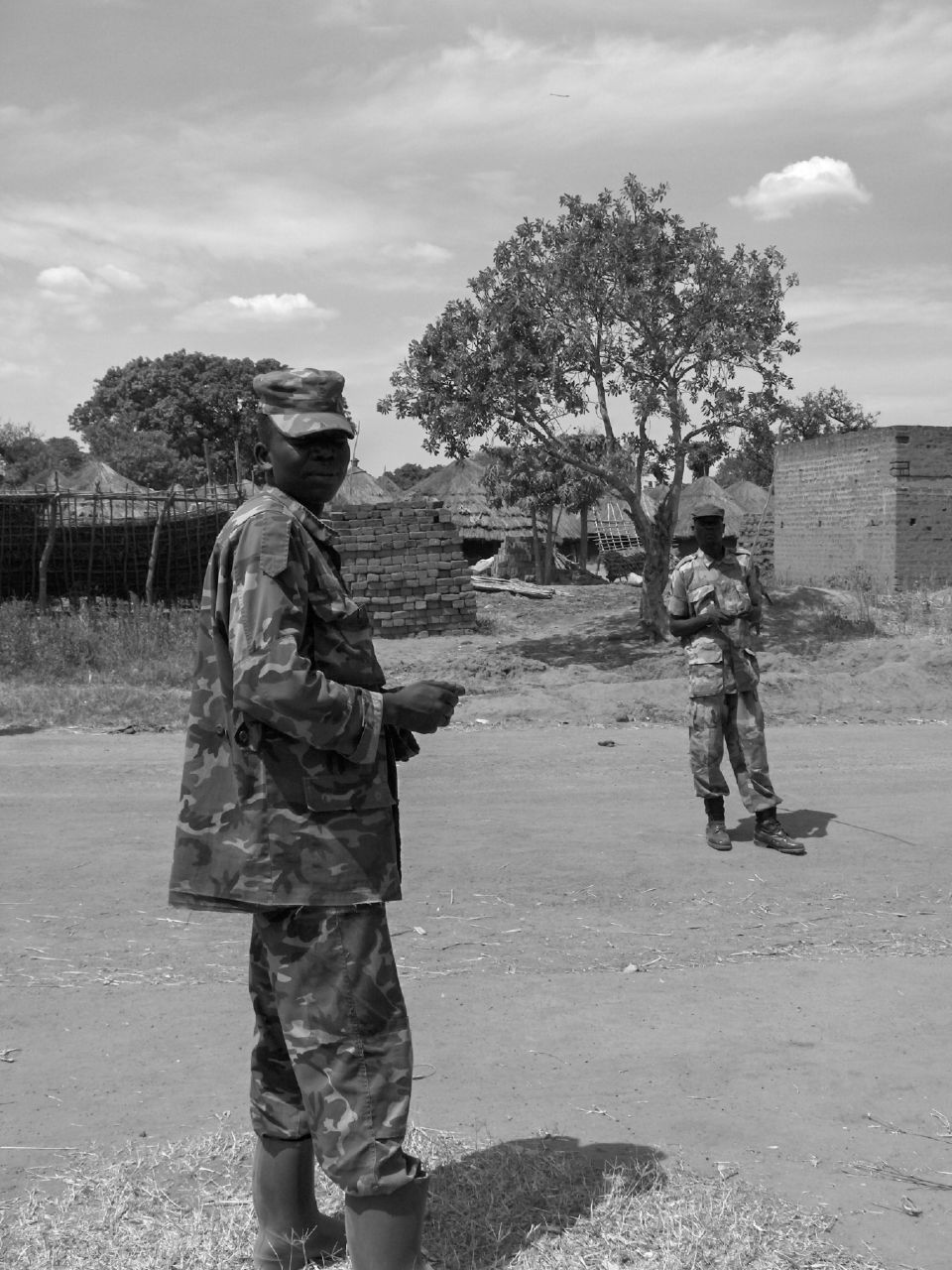 First of all, Wilkerson overplays the role of the U.S. Yes, in recent years, the America military has provided some intel and perhaps even a bit of training for the Ugandan Army. It's a nice PR gesture and an attempt to highlight the "good neighbor" aspects of the newly established AFRICOM. But that token support has been extremely limited, and there's only so much help AFRICOM can provide to Ugandan forces operating far outside their own country. If the U.S. was seriously committed to killing or capturing Kony, and provided a fraction of the resources going to Afghanistan, the LRA would no longer exist.
Second of all, the notion that "the governments of the DRC, South Sudan, and CAR have pitched in" is laughable. [READ MORE]
 Labels:
CAR,
Dave Reidy,
DRC,
Foreign Policy,
Joseph Kony,
LRA,
southern Sudan,
Sudan,
Uganda
|
Labels:
CAR,
Dave Reidy,
DRC,
Foreign Policy,
Joseph Kony,
LRA,
southern Sudan,
Sudan,
Uganda
|
 3
comments
3
comments
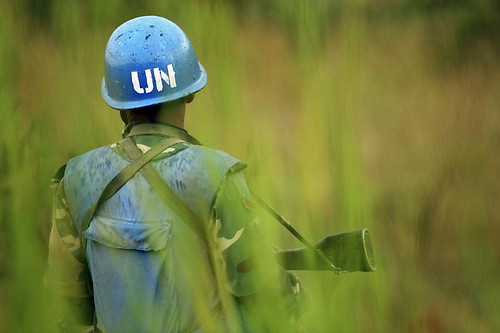
The disaster in the Democratic Republic of Congo continues unabated, and, as expected, the UN is moving to withdraw the controversial MONUC peacekeeping force. The short version of the story is that Congolese President Joseph Kabila is flexing his muscles, "requesting" the UN to leave. MONUC has long received mixed reviews, but the past year has been particularly difficult. Allegations of assisting brutal warlords and a general inability to affect change in the restive eastern provinces have plagued the UN, and the end appears nigh.
Contributing to the regional instability is the continued presence of the Lord's Resistance Army, which has migrated from it's birthplace in Uganda across the DRC, Central African Republic, and Sudan. Kudos to the New York Times for having an excellent reporter, Jeffrey Gettleman, there to cover the area (read his great piece on Somalia from 2009). Unfortunately he misses part of the story about the LRA.
Labels:
Africa,
Bashir,
Central African Republic,
Dave Reidy,
DRC,
Jeffrey Gettleman,
Kabila,
LRA,
MONUC,
Somalia,
Sudan
|
0
comments
Stay in the Loop!


 Posts
All Comments
Posts
All Comments
Our Favorite Blogs


.jpg)