Yes it's true, yet strangely you don't see that headline splashed across CNN. The reason is that this wasn't a conventional attack on Iran, it was a cyber attack. As David Sanger reported in the New York Times,
The Iranian government agency that runs the country’s nuclear facilities, including those the West suspects are part of a weapons program, has reported that its engineers are trying to protect their facilities from a sophisticated computer worm that has infected industrial plants across Iran.In short, a computer worm has infiltrated the systems that run Iran's nuclear facilities, causing an unspecified amount of damage. As the story reports, experts (and I am certainly not one) believe the level of sophistication of the attack could only be achieved by a state. Without further information about the extent of the damage or nature of the worm, which given the nature of attack is unlikely to be made public, it's impossible to say for sure who released the worm or why, but early speculation points at two prime suspects - Israel and the United States.
Attacking the technological base of the Iranian nuclear program is not a solution to the problem, but it will most likely slow the program. While that may seem minor, if you believe Jeffrey Goldberg's recent article in The Atlantic then perhaps a bit of time may be tremendously important.
Even more important, however, will be the repercussions from this attack. If Iran believes that the U.S. or Israel was behind the attack, it may seek to retaliate, in cyberspace or with a conventional attack. Furthermore, if other nations, particularly China and Russia, come to believe that America was behind this attack, it could mark the start of a new era of cyberwar. Until now countries have tested defenses and capabilities, much like boxers circling the ring and throwing exploratory jabs. Launching a prominent attack on Iran's nuclear systems could come to be viewed as the first real punch thrown in this match, and could signal to other powers that the fight is on.
Once that barrier is crossed, and cyberwar crosses from potential to actual, there is no going back.
While we've been distracted by the ever-changing world around us and lost interest in Iran after sanctions were passed by Congress, life has rolled on in Tehran. But it has not rolled smoothly. Yesterday marked a crucial turning point in domestic relations, as merchants in the capital ended a 12-day strike.
Now why is this important? No, it's not the result of U.S. sanctions and is certainly no reason to declare a victory. And no, these strikes really are not similar to the mass protests and strikes of 1979 that brought down the Shah - the government is in no immediate danger of collapsing. But this strike is crucially important as an indicator that economic conditions in Iran continue to deteriorate and that the general populace has thus far been unswayed by the "Blame America" rhetoric from the regime.
Under the mismanagement of President Ahmadinejad, the Iranian economy has cratered. He spun profits from record-high oil prices into vast subsidy programs to bulwark domestic support, but when oil prices dropped those programs became massive government expenditures with no revenue backing. Not only did he miss an opportunity to expand and diversify Iran's economy, Ahmadinejad's fiscal cluelessness has now burdened the state with more debt than it can handle. The solution: higher taxes, which led directly to the recent strike.
Again, the regime is not in imminent danger. But these strikes illustrate the cost of financial imprudence, and without an economic turnaround even blatant vote-stealing won't keep the current government afloat.
The drumbeat of support for harsh sanctions against Iran continues, this time in a featured article from
Sanctions helped South Africa's pro-democracy movement. They can do the same in Iran.Really? They did? Because I seem to recall that the sanctions against South Africa were economically pathetic and insignificant. They had value as a message from the international community, but the meat of the sanctions did little. In fact, the ban on arms trade with South Africa, one of the core components of the sanctions regime (along with oil), had the perverse effect of transforming South Africa into one of the largest and most sophisticated arms manufacturers in the world (see Crawford and Klotz for details).
And oil, the second primary focus of the sanctions regime, continued to flow freely. Smuggling was rampant, and many states chose to defy the will of the international community to exploit a lucrative market. Ironically, Iran was the main player to do so (see Klinghoffer for more). In short, the international embargoes on goods had little effect on the apartheid regime, and certainly did not "marginalize and undermine the government" as
Mohsen Makhmalbaf, a filmmaker, to substantiate this claim. Unfortunately, all other supporting claims are from "a growing number of key opinion-makers and activists in the green movement," "other Iranian dissidents and activists," and "Iranian experts and analysts" - an impressive list of anonymous sources. I understand that personal security is a factor (nobody wants a knock on the door from the basij), but constructing an entire argument on nameless sources is poor analysis, especially when you factor in their dismissal of Mir Hossein Mousavi and other leaders speaking out against sanctions for "for what appear to be tactical reasons." So the opinion of Mousavi, who was the face of the Green Movement and actually stood for office, can be summarily dismissed, but the thoughts of anonymous "dissidents and activists" are grounds for robust sanctions.
Puzzlingly, the authors paint China and Russia as complicit in Tehran's pillaging of natural resources, yet do not recognize that sanctions are meaningless without full international cooperation. The U.S. could pass harsh unilateral sanctions on Iran, and would most likely be supported by many European allies. However, if Russia and, even more, China, could undermine any sanctions simply by continuing to trade. The growing energy appetite of China and Russian refinement capabilities could comfortably offset the loss of trade from the U.S. and Europe. In other words, the Obama Administration is constrained in what it can do, something the authors fail to recognize.
Harsh sanctions are not the answer in Iran. The risk of playing into the hands of Tehran's hardliners by acting as "the Great Satan" is high, and the potential payoff is low, especially without full international support. More troubling is the idea that the authors speak for "Iranians who yearn for democracy," yet fail to produce a shred of proof that the disparate members of the loosely-affiliated Green Movement would welcome international sanctions. Dubowitz and Weinthal, and Slate, should know better.
(A belated analysis of the Obama Administration’s Nuclear Posture Review, released on April 5, 2010)
The Obama Nuclear Posture Review is a profoundly political document whose main effect is diplomatic. It makes no major strategic changes to US nuclear doctrine, and the changes it does make are hedged by reservations. The document’s major departure from its predecessor, the Bush Administration’s 2002 NPR, is that of tone. As one reviewer noted, President Obama is no longer brandishing “a nuclear sword in every direction," which is the main legacy of this review.
First to the details. The review eschews a policy that the “sole use” of nuclear weapons is for deterrence, instead declaring that
“The fundamental role of U.S. nuclear weapons, which will continue as long as nuclear weapons exist, is to deter nuclear attack on the United States, our allies, and partners.The NPR sends a message to North Korea and Iran, declaring that
"the United States will not use or threaten to use nuclear weapons against non-nuclear weapons states that are party to the Nuclear Non-Proliferation Treaty and in compliance with their nuclear non-proliferation obligations."While the US will not use nuclear weapons to counter a chemical weapons attack, the review includes an exception for biological weapons, stating that
"the United States reserves the right to make any adjustment in the assurance that may be warranted by the evolution and proliferation of the biological weapons threat and U.S. capacities to counter that threat."Regarding the contentious issue of the deployment of tactical nuclear weapons in Europe, the NPR states that
"The United States will consult with our allies regarding the future basing of nuclear weapons in Europe, and is committed to making consensus decisions through NATO processes."In essence, although abandoning the bluster of the Bush Administration, the Obama Administration still maintains the right to use nuclear weapons outside of the context of a nuclear attack on the United States, and clearly describes North Korea and Iran as countries for which any assurances do not apply. Although this represents a shift in tone from the Bush years, its strategic impact is minimal. In fact, Stephen Walt has gone so far as to declare that “from a purely strategic perspective, this new statement is largely meaningless.”
Now to the politics. (more after the jump)
To my esteemed colleague, Jeff Schneider:
You wrote that the news of a vote in Sadr City to determine which candidate the Sadrist MPs would support was a positive development. I respectfully disagree. Or, if you prefer the immortal words of Dan Aykroyd, Jeff, you ignorant slut.
First of all, these "elections" are entirely unmonitored. As the New York Times reported,
There were no lists of eligible voters, no one was required to show identification and apparently there was no way to prevent people from voting more than once...
Zaman Jabar, 30, who helped organize the process, said traditional election standards like registering voters and requiring identification were not necessary.
“We know all the voters in our sector here,” he said. “All of them are our people.”

In short, the entire "election" is a sham, and the end result will be the same - whichever party does the best job bribing Sadr will get his support. And the bribing has already begun. Juan Cole relays the news that al-Maliki already began releasing Sadrist political prisoners.
Furthermore, Sunni-Shia divisions are driving this process, not democracy.
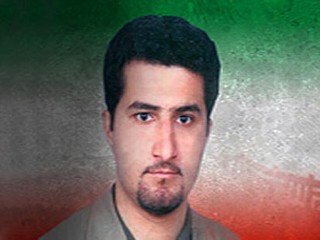
The story broke almost a year ago -- Iranian Foreign Ministry spokesman Ramin Mehmanparast claimed that Saudi Arabia
"has handed over Iran's nuclear scientist Amiri to America...he is among 11 jailed Iranians in America"Now we know that that is untrue, and Iran as a lot of egg on their face. Especially after Iranian Foreign Ministry spokesman Hasan Qashqavi maintained that:
"Amiri's fate is Saudi Arabia's responsibility."In a massive coup for the CIA, Amiri (as reported by ABC news) voluntarily defected to the CIA while on Hajj in 2009, after a long courtship with the CIA through intermediaries inside Iran. He has, for the past year...
(more after the break)

On Sunday the Israeli military revealed the latest in a long line of drone technology to come out of this small but extremely well armed nation. As reported by the My Way blog,
"The Heron TP drones have a wingspan of 86 feet (26 meters), making them the size of Boeing 737 passenger jets and the largest unmanned aircraft in Israel's military. The planes can fly at least 20 consecutive hours and are primarily used for surveillance and carrying diverse payloads."In news reports released today, the most highly touted fact concerning the Heron TP line of drones is that due to their large size and fuel capacity that they are in fact capable of reaching the Persian Gulf (ie Iran) from Israel. While I am sure that hinting at proof that Israel is gearing up to carry out a military strike against Iran sells newspapers, this is certainly not any such proof. Drones are ideally suited for the irregular warfare that the US and Israel find itself fighting today. Drones (aka unmanned aerial vehicles (UAV)/ unmanned aerial Systems (UAS)) are capable of providing real time video surveillance of the battle space and can alert troops to obstacles and ambushes. They have been especially effective in places like Afghanistan and Pakistan where insurgents may be able to detect them overhead if its a clear day, but simply do not possess the firepower to bring them down. Israel has similarly used drones in Gaza and Lebanon to increase their surveillance of insurgent movements and even to assassinate the occasional terrorist.
Where drones have not proven effective has been in wars against actual states that possess actual militaries.
Today, against my better judgements, I clicked on a banner ad on Politico -- and boy howdy it lead to some interesting finds! A spashy, expensive, flash banner on Iran and Ras Al Khaimah (an Emirate of the UAE) drew my attention -- mostly due to its "feary-ness". The result was my discovery of this "blog".
Run on the behalf of "Sheikh" Khalid bin Saqr Al Qasimi for $900,000 USD by California Strategies (a lobbying firm), the webpage RAKforthepeople.com is a very interesting example of the hilarity that can ensue from the kind of royal family spats that only the Gulf Oil States can provide. The website (readable in english or arabic) is a swift-boatish hatchet job on the little Emirate of Ras Al Khaimah (RAK). The "research" on the site claims that RAK is a breeding ground for Al Qaeda, a proxy of Iran, and all around danger to freedom loving people everywhere. The site suggests that today RAK is actively seeking to help Iran get nuclear weapons, all the while aiding global terrorists everywhere...
As Iran rolls on into its "ten days of dawn" celebration -- during which it has promised to "punch" the West/peeps they don't like -- several important stories have come out of the Islamic Republic the past few days. Here are the few we are following here at D&D -- check back soon for updates on these and more!
In the past 2 days Iran has announced new production of multiple high tech military technologies. Among these are new 120, 130mm mortar shells, laser guided anti-armor and anti-helicopter missiles, but perhaps more notable is Iran's opening of a new UAV/Drone factory. Coupled with the announced Iranian s-300 air defense knock-off (the subject of my previous Iran Thread Post), Iran has begun building military hardware at home that targeted sanctions have sought to deny them. Along with these announcements, Iran began enriching Uranium to 20% TODAY -- and has signalled its intent to build 10 new nuclear sites...
 Labels:
Iran,
Iran Thread,
Jeff Schneider,
Khamenei,
Mahmoud Ahmadinejad,
The Green Movement,
UAV
|
Labels:
Iran,
Iran Thread,
Jeff Schneider,
Khamenei,
Mahmoud Ahmadinejad,
The Green Movement,
UAV
|
 0
comments
0
comments
UPDATE at 2:00 PM EST
Iran has informed the IAEA that they will begin enriching uranium to 20% starting tomorrow.
UPDATE at 1:24 PM EST
Iran's supreme leader has threatened violence if planned opposition marches lead by Mir Houssein Musavi are carried out this week. Iranians will "punch [them] in the mouth to shock them" Ayatollah Khamenei promised -- though he demurred over who "them" is -- the protesters, their leadership, or the "western puppet-masters" he claims are instigating their "counter-revolutionary" behavior.
News on Iran's next move continues below.
From Reuters India:
TEHRAN (Reuters) - Iran will soon unveil a domestically-made air defence system with at least the same capability as Russia's S-300 anti-aircraft hardware, an Iranian air force commander was quoted as saying on Monday.For months, Iran has been attempting to...
Labels:
air defense,
Iran,
IRNA,
Israel,
Jeff Schneider,
nuclear weapons,
Reuters,
s-300,
sanctions,
Vali Nasr
|
0
comments
From CNS News:
According to a Jan. 28 translation from BBC Monitoring Middle East, Ahmadinejad spoke on official Iranian television, saying that this year’s “Ten Days of Dawn” celebration, marking the anniversary of the country’s Islamic Revolution, would see the “demise” of the American system.Big talk from a big talker, but unfortunately we have to take him seriously. President Ahmadinejad seems to take his nation's birthday seriously, having already begun the executions of 9 dissidents in the lead up to the big party -- I'd hate to see his advent calendar.
“I believe that 22 Bahman [ February 11 in the Persian calendar] this year marks the demise of the liberal capitalist system.” Ahmadinejad said.
Well, the blogosphere has lit up with speculation as to what exactly Iran plans to do this Feb. 11 to strike a blow against the liberal capitalist system. Will it be a nuclear test? Doubtful. Unless the Islamic Republic has rapidly sped up enrichment, they are in no shape to detonate anything. So what?
More on this to come, I promise -- but keep your eyes open people, Iran has asked for your attention.
My colleague Jeremy has a great post about the range of options available to Washington in dealing with the nuclear problem in Tehran. I agree with him that a military strike is an undesirable option. It is unlikely to succeed, and could be counter-productive by persuading the Iranians that it is in their vital national interest to go nuclear. I also agree with him that the Iranian economy is terribly vulnerable, especially to gasoline sanctions. The Obama Administration seems to share his enthusiasm for sanctions. Secretary Clinton recently came out in support of "targeted sanctions," which would attempt to punish the decision-makers in Iran, such as the Revolutionary Guard, but not harm the average Iranian. However, this approach is not without risks.
Firstly, an effective sanctions regime requires cooperation from the entire international community. If sanctions are to target gasoline, then oil-producing and refining nations are the key participants - without their support, any sanctions effort would fail. Saudi Arabia would most likely help any effort to stymie their Iranian nemesis, but other oil-producing states, such as Venezuela, may not be so forthcoming. The major question marks, as always, are Russia and China. If they can be persuaded to accede, sanctions stand a chance of squeezing Tehran. But if they, or large MNC's based in their territories, don't buy in, sanctions will be ineffective.
Secondly, economic sanctions against Iran are a risky gambit with the potential for severe blowback. The Iranian regime is internally isolated and faces a strong and growing opposition. Most reports speculate that the faltering economy is a key issue for the opposition movement and a significant source of dissatisfaction. The majority of the populace faults the government, not the international community, for their economic difficulties. This is notable because the trump card that the Iranian regime has often played in the past is to blame everything on "The Great Satan." By shifting responsibility for any and all woes that everyday Iranians face to the United States, the government has been able to shore up their domestic credentials and remain in power.
That tactic is currently failing. The Iranian government has been unable to convince the populace that America is behind their problems, and as a result the opposition movement continues to gather strength. Economic sanctions could reverse this trend, and enable the regime to shift blame onto the international community. While "targeted" sanctions solve this problem in theory, in practice it is difficult if not impossible to limit the pernicious effects of sanctions to a select few. Furthermore, the key is not who is actually affected by sanctions - it is who thinks they are being affected. The current dynamic faults the Iranian government, but it is a fragile consensus. Public opinion is notoriously fickle, and the mere existence of a publicized sanctions program could be enough to tilt the balance of blame onto the international community.
I don't mean to suggest that sanctions should be taken off the table. In a problematic situation, sometimes the least-bad option is the best. But any move towards sanctions must acknowledge and address these concerns or risk failure.
Iran’s pursuit of a nuclear weapon threatens to ignite a nuclear arms race across the Middle East. The U.S. cannot tolerate the level of instability that would result from Middle Eastern states developing nuclear weapons, as the region remains vital to the energy security of the United States. Sanctions placed on Iran by the international community have thus far been unable to force Iran into a position where it is willing to seriously negotiate. It is my opinion that more direct action is needed to force the hand of Iran’s leaders.
Iran perceives itself as being a rising regional hegemon and is determined to play a dominant role in the Gulf. The Iranian state believes that the United States is intent upon acting on its stated policy of regime change in Iran and thus views the U.S. presence in Iraq and Afghanistan as the greatest threat to its national security. Iran also sees itself as being surrounded by unfriendly neighbors, two of whom –Israel and Pakistan- are armed with nuclear weapons.
Available intelligence suggests that Iran is pursuing a nuclear weapons program. This evidence includes:
- Iran’s building of a nuclear enrichment plant in the desert at Natanz. The facility is designed to house 54,000 centrifuges but only 8,000 are believed to be operational. The fact that this facility has been converted into an underground bunker and is surrounded by antiaircraft guns strongly suggests that the nuclear activities contained within are not IAEA compliant.
- Data extracted from Iran’s computer networks in 2007 showed the Iranians to be in possession of blueprints for a nuclear warhead.
- The recent discovery of a hidden nuclear enrichment plant located inside an Iranian Revolutionary Guard base about 20 miles from the town of Qum.
While the previous administration recognized the Iranian threat, the Bush policy of placing conditions on negotiations has only allowed the Iranians to progress further on their timeline toward achieving a weapon. Furthermore, what seemed like early success on the part of the Obama administration in getting the Iranians to return to the negotiating table was actually just another attempt at stalling.
While air strikes have long been the solution of choice for dealing with Iran's nuclear program, expert analysis has shown that at best a coordinated air strike would merely delay Iran's acquisition of a nuclear device by approximately three years. Secretary if Defense Robert Gates is also an advocate of this analysis. I propose that the US use "smart power" instead to drive the Iranian economy to near collapse through a "Price Attack."
While Iran’s pursuit of a nuclear weapon appears likely, I believe that Iran’s desire for nuclear energy is genuine. Oil industry experts are predicting that Iran’s oil exports will decline to zero by 2014-2015. This comes as a result of domestic energy demand growth (6.4%) exceeding supply growth (5.6%) every year since 1980. Iran’s dependence on its shrinking oil export revenue suggests that the regime may be more vulnerable than previously believed.
Iran’s oil export crisis is a strategic opportunity
- The US should undertake a non-violent economic attack on the Iranian government that seeks to collapse their economy thereby denying them the resources to pursue a nuclear weapons program
- A price attack seeks to erode market power and reduce the price of oil. This can be accomplished through the adoption of increased fuel efficiency standards that overtime will decrease the demand for oil and force cartel producers to defend price by reducing supply. This is exactly what happened to Saudi Arabia in the 1980’s. Eventually Saudi Arabia was forced to increase production in order to reclaim market share and stave off bankruptcy, which caused the price of oil to drop further
- The goal of a price attack would be to force Saudi Arabia to repeat this behavior. As a result, Iran’s oil revenues would collapse because unlike other OPEC countries, Iran cannot increase production to compensate for falling price due to its crumbling infrastructure
- According to a report published by the National Academy of Sciences, a 50% increase in U.S. fuel efficiency standards would be enough to lower global demand by 2%-3% in 5-7 years, which historically has been enough to trigger a price defense by the cartel
Policy Implications
- Likely to constrain Iran in the long run, while simultaneously yielding monetary savings for the U.S.
- There is a chance that the price attack may be too successful and lead to the complete collapse of the Iranian state resulting in a regional power vacuum
- Policy relies upon Iranian oil exports continuing to decline due to a lack of investment in infrastructure. However, Europe and China continue to defy sanctions by investing in Iran’s energy sector
Labels:
Arms Race,
Iran,
Jeremy White,
Middle East,
nuclear weapons,
nukes,
Oil,
Price Attack,
Smart Power
|
0
comments
Stay in the Loop!


 Posts
All Comments
Posts
All Comments
Our Favorite Blogs


.jpg)