Recently announced plans by the Afghan government for reconciliation and reintegration with the Taliban have been described to me by Afghan colleagues as both the best and the last idea that remains for how to bring the bring the nine year war to a close. The international security forces (ISAF) and the Taliban have been locked in a pseudo stalemate since the insurgent revival in 2007. While ISAF forces are more than capable of forcibly driving the Taliban from almost any area of Afghanistan, such offenses have roughly the same effect as squeezing a balloon. The more pressure you apply in one area the greater their presence will expand in another. As international support for the war has waned, the Karzai government has come under immense pressure to negotiate with the nebulous Taliban leadership in order to provide its coalition allies with an honorable exit strategy. While such a plan might seem feasible from the perspective of those sitting in Washington and perhaps even Kabul, the realities of how the insurgency is structured outside the capital discredit any hope for a lasting reconciliation.
During the course of interviews I conducted this summer in Kabul with members of the Force Reintegration Cell (F-RIC) at ISAF HQ I was shocked to learn that their plans for Taliban reintegration were based entirely on misconceptions about how the insurgency operates. The strategy, as it was explained to me, is to reward communities, not fighters, for allowing their "saddened brothers" to come down from the mountains and rejoin society. There exists two major problems with this line of thinking. First of all, as anyone who has spent serious time in places like Kandahar and Helmand can tell you, the Taliban do not live in the mountains, the majority of the day to day insurgent fighters live in the very villages that they are intimidating. Furthermore, if only communities that contain former insurgents are being rewarded with development money, we are suddenly going to find ourselves with many more fighters than we ever thought existed. Villages that were never known to have a Taliban presence before will inevitably begin blowing up their own roads in order to prove that they are deserving of reintegration money.
Apart from the difficulties surrounding how to actually identify low level insurgents, the question remains as to with whom the Karzai government actually intends to negotiate. When they ruled over most of Afghanistan in the 90's the Taliban possessed a hierarchical structure centering around Mullah Mohammed Omar. However, since their fall from power in 2001 and their eventual escape to Pakistan, the Taliban has since become an ambiguous grouping of smaller factions centering around key Mujahideen personalities such as Gulbuddin Hekmatyar and Jalaluddin Haqqani. Rumors abound of the senior Taliban leadership having reconstituted itself in Quetta, however, scholars such as Hassan Abbas challenge the veracity of these claims and question what if any influence the Quetta Shura would even have over the rest of the Taliban factions should it actually exist.

One of the major revelations to come out of the 92,000 previously classified documents recently released by wikileaks is that apparently the Taliban have on several occasions fired at U.S aircraft using surface to air missiles better known as MANPADS (Man Portable Air Defense Systems). The media has seized upon this story as yet another government blunder since after all wasn't it the U.S. government who originally supplied the Mujahideen with stinger missiles back in the 80's when they were fighting the Soviets? However, a closer examination of the specs on these stingers leads one to a far different and perhaps more dangerous conclusion; that Pakistan has begun to supply the Taliban with their own surface to air missiles to use against U.S. forces.
I had often heard that there were several hundred stingers unaccounted for after the withdrawal of Soviet forces from Afghanistan and when I was there this summer I asked the crews of helicopters I was flying on why it was that we no longer considered these weapons a threat. According to weapons experts, the batteries on stinger missiles are good for one shot each and they must be changed out if the delivery system is to be used more than once. Furthermore, the average shelf life of unused batteries is only 4-5 years. Meaning that any stinger missiles given to the Mujahideen in the 80's would no longer be effective today. While it is not beyond the realm of contemplation that a skilled technician could jerry rig some sort of alternative battery for these devices, such skill is likely out of the range of the vast majority of Taliban. These weapons are however still capable of exploding, only the delivery device is deactivated. As such a great deal of the remaining stingers left over from the 80's have probably since been turned into IEDs.
The fact remains however that the Taliban are getting fully functioning MANPADS from somewhere, which in all likelihood have been constructed in the last 4-5 years. The most likely candidate is Pakistan which is both the traditional patron of the Taliban and has for the last twenty years been a manufacturer of their very own surface to air missile known as the Anza. The Anza has an effective range of up to 5000 meters and could certainly have been behind the downing of several US helicopters in recent years. In recent years, Pakistan has advertised the Anza series for export,displaying it at the International Defense Exhibition (IDEX) 2007 event in the UAE.
Worst case scenario: The Pakistani ISI is directly providing the Taliban with surface to air missiles
Best Case: Pakistan is irresponsibly selling MANPADS on the open market and they are ending up in the hands of the Taliban through a middleman

On Monday, the New York Times reported on a Defense Department memo claiming that under Afghanistan's hard terrain lays nearly a $1 trillion in mineral deposits. These minerals include large veins of iron, copper, cobalt, gold and lithium a vital component of computer batteries. But the reality of this story is that it is more of a propaganda campaign or "information operation" than it is real news. Yes it is true that these minerals do exist in Afghanistan but it is by no means news. The U.S. Geological survey made the discovery back in 2007. However, the U.S. government is pushing the story now because the coalition here has been rocked by some particularly bad press here the past week (Ironically from the New York Times. This causes me to wonder if the Times is attempting to buy its way back into the good graces of the Embassy in Kabul.) The most damaging of this press was comments attributed to President Karzai about the West not being able to win in Afghanistan. This story is similar to ones that preceded the Iraq War when the Bush administration claimed that Iraq's oil wealth would pay for all the costs of reconstruction.
The reason why news of these vasts deposits is no need to celebrate is simple. The minerals are worthless unless you can actually get private companies to come in here and mine them. And with the security situation what it is that is not likely to happen any time soon. Afghanistan for instance would be a great country to run oil pipeline through, stretching from Kazakhstan and Uzbekistan through Afghanistan to Pakistan and then on to China as well. However, despite a great deal of effort on the part of a U.S. company called Unocal they were never able to negotiate enough treaties with all the tribes and Taliban to agree not to blow up the lines or siphon oil from them. The one country with a mining contract in Afghanistan right now is China which now owns the largest copper mine here. They don't care about their people dying so it works out well for them.
The Taliban can't really mine anything so we don't really have to worry about them getting this revenue as they simply arent organized enough not to mention the lliterate enough. Furthermore, from this map you can tell that the majority of the deposits are located in Northern, Western and Central Afghanistan, all areas where the Taliban is not strong. The Taliban makes the majority of their money through taxes, which they are pretty good at collecting. They front farmers the money to buy opium poppy seed. They then take a percentage of the farmers cut when he sells his product to the local drug lord. They then also tax the drug lord for the right to move his product through areas they control. It is very mafia like here both in the government and the black market.
The other really bad thing about all these mineral deposits being discovered is that its really just one more thing for the government here to exploit for bribes. The Chinese got their copper mine for a song simply by paying a few million to the right ministers. The mine itself is worth billions.
The focus of the U.S. Military in Afghanistan has apparently shifted towards Kandahar. General McChrystal recently declared that the operation has already begun. But what about Marjah? Only recently it was the primary theater for U.S. forces, and, as written here, the real struggle began after kinetic operations ended. So now, at the most important juncture, why are resources and attention being pulled elsewhere? There are numerous outstanding issues in Marjah, and neglecting them now will undermine any progress made in the past.
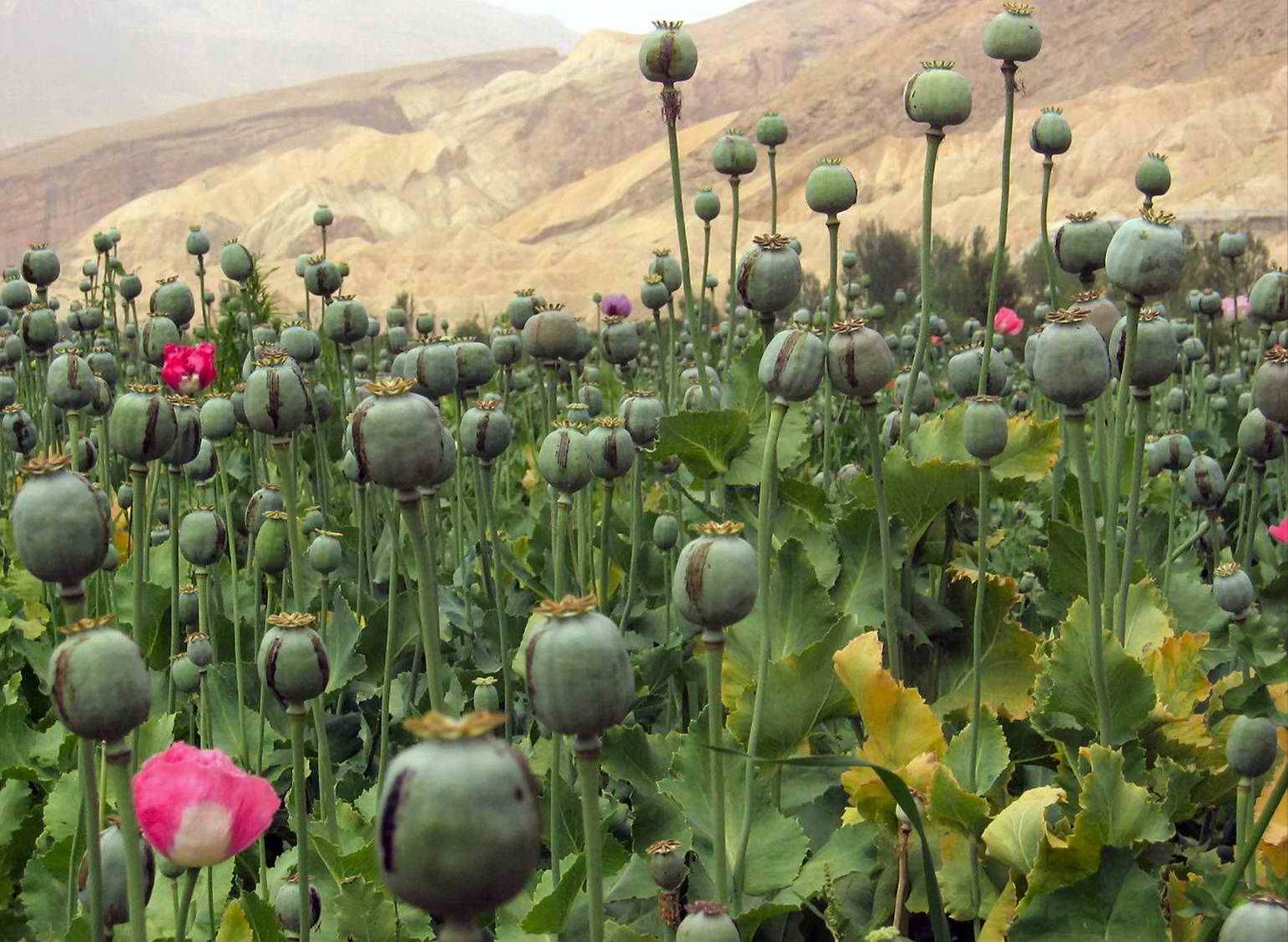
It's important to understand that farmers do not become wealthy by growing opium. They do it because it is a hardy crop and in times of insecurity is a reliable producer of enough cash to survive. The illicit wealth goes to a myriad of middlemen, from local drug runners and Taliban enforcers to international smugglers and distributors. These middlemen often coerce farmers into growing poppy. In areas where the Afghan government's writ is circumscribed, local Taliban sometimes require local farmers to plant opium, and threaten punishment if they do not deliver a satisfactory output after the harvest.
When viewed through this prism of desperation and coercion, it becomes clear that benign neglect from coalition forces is not sufficient to address the problem.
 Labels:
Afghanistan,
Dave Reidy,
governance,
Marjah,
opium,
Security,
Stanley McChrystal,
Taliban
|
Labels:
Afghanistan,
Dave Reidy,
governance,
Marjah,
opium,
Security,
Stanley McChrystal,
Taliban
|
 0
comments
0
comments
Fascinating new story from the New York Times about the capture of Mullah Baradar earlier this week. According to this story, it was an accident! The Pakistanis had no idea that Baradar was at the meeting they raided, and only realized later that he was in custody.
The story briefly mentions the potential ramifications; most notably that Pakistan has NOT reoriented its strategic preferences and has NOT decided to crack down on the Afghan Taliban, which has been the meme in most analysis of the story. Instead, perhaps this was a rather embarrassing mistake - an attempt to arrest a low-level suspect to appease the U.S. accidentally net the big fish that was supposed to be protected. Or perhaps the Pakistanis who conducted the raid - noted only as "Pakistani counterterrorist officers" in the NYT - were not in contact with the ISI and therefore unaware that Baradar was receiving covert support.
This is all idle speculation, of course, but it warrants mention. The biggest benefit from the Baradar capture was the perceived shift in Pakistani strategy and cooperation, but identifying it as a mistake means that the presumptive strategic breakthrough could be completely bunk. And the fact that the CIA was not permitted access for two full weeks should certainly cast doubts on any claim of increased cooperation.

The 17,500 NATO and Afghan Troops ringing the Helmand town of Marjah have begun the long planned offensive into the Taliban stronghold in southern Afghanistan. While the unfolding battle is being covered reasonably well by Reuters, the WSJ, and Pakistan's Daily Times, please stay with us here at D&D for our analysis and reporting as well.
In my eyes, there are several important stories coming out of Operation Moshtarak that are secondary to the combat, but may have far reaching importance in the future of COIN. The first is the long planned instillation of the so-called "government in a box" for the post-conflict scenario in Marjah. Should the NATO/Afghan forces secure the city through traditional sweep, clear and hold tactics -- the second stage of the operation is the instantaneous insertion of pre-planned governance to fill the vacuum in Marjah. I think I can safely say the eyes of COIN theorists everywhere will be fixed on this phase of the operation -- which could become a centerpoint in the Obama Administration's Afghan strategy. It is true that while the NATO/Afghan forces are not outfought by the Taliban, they have most definitely been out governed, something that Operation Moshtarak may begin...
Labels:
COIN,
Jeff Schneider,
Marjah,
NATO,
Operation Moshtarak,
Stanley McChrystal,
Taliban
|
0
comments
Amidst the flailing economy and the election of Cosmo centerfolds to Congress we have lost focus on Afghanistan. Ignored in the State of the Union, the campaign had a brief burst of news two weeks ago, but has again dipped below the horizon; outshined by domestic concerns.
However, two trends of note are emerging in Afghanistan. The first, which I will not address in this post, is the offensive in Marjah. The second is the plan to pay a Pashtun tribe, the Shinwari, to fight against the Taliban. This news broke at the end of January, but quickly faded, much to my surprise and dismay.
It makes no sense here to regurgitate the repeated failings of this policy in the past, especially when Max Fisher at the Atlantic does such a thorough job cataloging the tawdry disasters of yesteryear. His point, which I agree with, is that arming one faction to fight another is a risky gamble that often creates short-term gains that are paid for with long-term consequences. As Fisher notes, we don’t have to look far for a comparison -
Labels:
Afghanistan,
Dave Reidy,
General McChrystal,
Iraq,
Shinwari,
Sunni Awakening,
Taliban
|
0
comments
Banning candidates in elections is a bad idea. Period. If anyone is going to decide who should be accepted or rejected in the electoral process, it should be voters. That’s the point of an election.
With the recent announcement that Iraq's electoral commission intends to ban even more candidates from running in the nation's March parliamentary elections, the US is understandably peeved. The idea that "the only solution is political" has become a bit of a buzz-phrase, but that doesn't mean it is wrong. A purely military solution is simply not feasible - just killing everyone isn't going to work in Iraq.
Since a military solution in Iraq is a non-starter, that leaves a political solution as the only available option. For a political solution to work, incentives must be provided for one’s opponents to participate in society – the economy, the media, and the political process. These incentives include amnesty for low-level opponents, guarantees against reprisals, jobs, education, and other opportunities to participate. Not letting your opponents participate in elections is, to put it mildly, quite counterproductive to these policies.
When candidates are banned from political office, even for well-justified and ostensibly legal reasons, it only gives the public more reason to doubt the political process. And the public, in this case, is usually right. Governments ban candidates for office when they present a threat to the incumbent’s rule – we see this clearly in Iran. Banning candidates in Iraq, undoubtedly a more permissive political environment than Iran, only does needless damage to the perception of democracy.
Ironically, although we are seeing backsliding in Iraq on this issue, in Afghanistan the approach is almost the opposite. Secretary of State Hillary Clinton’s words from today’s London conference illustrate this point precisely:
“Many low- and mid-level Taliban are driven to extremism more by economic opportunity or local politics than by ideology. With the right incentives, they can become part of Afghan democracy.”
Presumably, providing incentives to the Taliban in order to reintegrate them into Afghanistan’s fledgling democracy would not include banning them from public office.
Although the US is not yet publicly 100% on board with accommodating the Taliban, it would appear that they are moving in that direction. Even in the face of the slow pace of the US policy adjustment, the Karzai Administration is moving at full speed in the direction of reconciliation and reintegration.
This is the right approach. Getting extremist groups to participate in the political process should be the ultimate goal of the US in both Iraq and Afghanistan. If the ideas and ideologies of the US and these countries’ western-backed governments are better than those of their opponents (and I believe they are), then let them stand on their merits and be judged by the public.
Ultimately, it is a lot better for electoral opponents and parliamentary opposition members to argue and yell than it is for them to shoot at each other. Although meant for a different context, Winston Churchill’s words come to mind: “To jaw-jaw is always better than to war-war. “General Stanley McChrystal, the commander of NATO’s forces in Afghanistan, probably said it best: “I believe that a political solution to all conflicts is the inevitable outcome. And it's the right outcome."
You have to let your opponents run for office if you want them to participate in the political process. That’s how democracy works.
Recent reports seem to indicate that U.S. officials are optimistic about improvements in Afghanistan since President Obama announced his "surge." Unfortunately, any gains in security are ephemeral. More American troops acting intelligently can provide short-term security, but the long-term prospects are dependent on the powers in Kabul. And they are less promising.
Hamid Karzai is running an illegitimate and corrupt government, and unless major changes are made the U.S. is powerless to prevent the further deterioration of Afghanistan.
The issue is getting some notice, but all too many pundits are perfectly willing to minimize and overlook its importance. While most do acknowledge the Karzai problem, they are quick to emphasize the adaptability, intelligence, and courage of American troops as the decisive factors. They are right to emphasize those traits - the U.S. military is adaptable, intelligent, and courageous, and has achieved far more in Iraq and Afghanistan than anyone could reasonably have expected. But the underlying assumption is that if we just keep working hard and resist the urge to quit we can overcome all obstacles and be successful in Afghanistan. And that assumption simply isn't true. As long as there is no legitimate Afghan government there is nothing we can do. No improved strategy or increase in troop levels can do more than stem the bleeding. It's not a matter of COIN vs. counter-terrorism; that tactical argument misses the point.
An occupying military force is limited in what it can achieve. Defeating the Taliban requires a political, not military, approach; and foreign troops cannot be a sufficient political force. Creating a government in Afghanistan is not a simple task, and it is unreasonable to expect it be competent and capable after only a few short years. It is not unreasonable to expect that a government, even a weak and feeble one, can and should be working to get better. The Karzai government is not. Corruption is rampant and worsening and the Afghan people are showing less and less faith. Instead of using the security that the U.S. has provided in many provinces to speed development and demonstrate the modernity and prosperity that the Taliban are fighting against, Karzai has appointed drug smugglers, war criminals, and inept cronies to positions of power. Unsurprisingly, aid money has been siphoned away and even the areas of Afghanistan where the Taliban are not active show little progress.
We can rearrange deck chairs all we like, but without a legitimate partner in government the U.S. is powerless to change the direction of Afghanistan. If Karzai is unwilling to make changes, and he has given no indication of adapting, President Obama has no choice but to withdraw the troops. Yes, the results will be bad. The Taliban will gain ground, harbor terrorists, impose draconian laws and oppress women. The fallacy is believing we have the power to avert that outcome. It's not Washington that matters - it's Kabul.
Stay in the Loop!


 Posts
All Comments
Posts
All Comments
Our Favorite Blogs


.jpg)