I finally read James Traub's excellent piece on emerging drug trade routes, "Africa's Drug Problem." Traub highlights the case of Guinea-Bissau, a small West African state that has become a regional hub for narcotics smuggled from South America into Europe. The sheer volume being transported is staggering:
The U.N. Office on Drugs and Crime estimated that 40 tons of cocaine, with a street value of $1.8 billion, crossed West Africa on the way to Europe in 2006. The number has now dropped significantly, but many law-enforcement officials view this as a pause before further adaptation.Three key issues emerge from this piece.
This first is the maladaptive role governments play in this trade. In Guinea-Bissau, the state, depending on your level of cynicism, is either impotent to stop drug traffickers or is entirely complicit and enmeshed in illegal activities. Traub presents strong, although anecdotal, evidence of the latter:
Then, Djata says: “We got a call from the prime minister’s office saying that we must yield up the drugs to the civil authorities. They said the drugs would not be secure in police headquarters, and they must be taken to the public treasury.” A squad of heavily armed Interior Ministry police surrounded the building. Djata said his boss replied, “We will bring the drugs ourselves, and then we will burn them.” Government officials refused. Djata and his men relented, and the drugs were taken to the public treasury. And soon, of course, they disappeared — as did the Colombians.In either case, the mismanagement of resources by governments has either created additional incentive for public officials to illegal enrich themselves or has deprived the state of the necessary capabilities to intercept well-financed drug traffickers. The heart of the matter is the prevalence, and acceptance, of corruption.
Secondly, the insatiable global demand for illegal narcotics provides a powerful financial incentive to criminal gangs.
 Labels:
Africa,
corruption,
Dave Reidy,
drugs,
extremists,
governance,
Guinea-Bissau,
James Traub,
smuggling
|
 0
comments
The disaster in the Democratic Republic of Congo continues unabated, and, as expected, the UN is moving to withdraw the controversial MONUC peacekeeping force. The short version of the story is that Congolese President Joseph Kabila is flexing his muscles, "requesting" the UN to leave. MONUC has long received mixed reviews, but the past year has been particularly difficult. Allegations of assisting brutal warlords and a general inability to affect change in the restive eastern provinces have plagued the UN, and the end appears nigh.
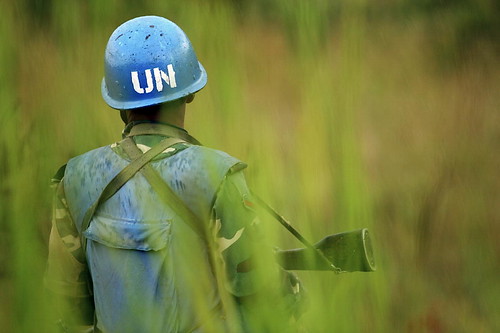
Contributing to the regional instability is the continued presence of the Lord's Resistance Army, which has migrated from it's birthplace in Uganda across the DRC, Central African Republic, and Sudan. Kudos to the New York Times for having an excellent reporter, Jeffrey Gettleman, there to cover the area (read his great piece on Somalia from 2009). Unfortunately he misses part of the story about the LRA.
Labels:
Africa,
Bashir,
Central African Republic,
Dave Reidy,
DRC,
Jeffrey Gettleman,
Kabila,
LRA,
MONUC,
Somalia,
Sudan
|
0
comments
Stay in the Loop!


 Posts
All Comments
Our Favorite Blogs