Yes it's true, yet strangely you don't see that headline splashed across CNN. The reason is that this wasn't a conventional attack on Iran, it was a cyber attack. As David Sanger reported in the New York Times,
The Iranian government agency that runs the country’s nuclear facilities, including those the West suspects are part of a weapons program, has reported that its engineers are trying to protect their facilities from a sophisticated computer worm that has infected industrial plants across Iran.In short, a computer worm has infiltrated the systems that run Iran's nuclear facilities, causing an unspecified amount of damage. As the story reports, experts (and I am certainly not one) believe the level of sophistication of the attack could only be achieved by a state. Without further information about the extent of the damage or nature of the worm, which given the nature of attack is unlikely to be made public, it's impossible to say for sure who released the worm or why, but early speculation points at two prime suspects - Israel and the United States.
Attacking the technological base of the Iranian nuclear program is not a solution to the problem, but it will most likely slow the program. While that may seem minor, if you believe Jeffrey Goldberg's recent article in The Atlantic then perhaps a bit of time may be tremendously important.
Even more important, however, will be the repercussions from this attack. If Iran believes that the U.S. or Israel was behind the attack, it may seek to retaliate, in cyberspace or with a conventional attack. Furthermore, if other nations, particularly China and Russia, come to believe that America was behind this attack, it could mark the start of a new era of cyberwar. Until now countries have tested defenses and capabilities, much like boxers circling the ring and throwing exploratory jabs. Launching a prominent attack on Iran's nuclear systems could come to be viewed as the first real punch thrown in this match, and could signal to other powers that the fight is on.
Once that barrier is crossed, and cyberwar crosses from potential to actual, there is no going back.
On Tuesday, former Massachusetts Governor Mitt Romney took to the opinion page of the Washington Post to deliver a full-throated assault on the new Strategic Arms Reduction Treaty (New-START) championed by President Obama and the nation's military leaders. Romney's op-ed, titled "Obama's worst foreign-policy mistake," takes President Obama to task for caving to the Russians and receiving "nothing whatsoever in return."
Romney's piece was another step toward a likely 2012 run for president, an attempt to assert his national security credentials on the national stage. As a one-term governor Romney has none of the "tough on national security" experience that conservative voters crave, and must convince the Republican base that he can handle Afghanistan and Iraq, not to mention Iran, North Korea, and other global hot spots.
Romney's effort, however, was nothing short of a disaster. His critique has been lampooned as "thoroughly ignorant," "groundless and misleading," and "ridiculous." Even The American Conservative called Romney's argument "absurd."
Fred Kaplan of Slate, an expert on nuclear weapons and arms control, went through Romney's argument line by line, debunking nearly every claim made by Romney. Romney uses wildly inaccurate weapons numbers, misunderstands the military's position on missile defense, and, at one point, even suggests that the Russians would try to mount ICBMs (Inter-Continental Ballistic Missiles) on strategic bombers and railroad cars.
Romney is not an international arms control expert, but he is an intelligent and analytical man. I'd bet my student loans that this was bad staff work. An initial draft was probably written by an aide, edits were made, not all were included, and someone pressed "send" prematurely. It's no excuse, but no politician or elected official writes everything submitted in their name, and mistakes happen.
Bad staff work doesn't mean Mitt Romney is ignorant of foreign policy, but it does illustrate a problem for the Republican Party - its leaders are not serious foreign policy leaders. Republicans, who have traditionally enjoyed wide margins over Democrats on national security issues, have turned inward to focus on domestic policy, ceding foreign policy to the Democrats. The Tea Party has swept the conservative base with an emphasis on tax cuts, budget deficits, and constitutional law. The rising stars and most popular officials in the Republican Party, from Senator Jim Demint of South Carolina and Governor Haley Barbour of Mississippi to Sarah Palin, are all focused primarily on domestic issues. The foreign policy leaders in the party, Senators like John McCain and Lindsay Graham, are either past their prime or too moderate to survive a primary. One needs to look no further than RNC Chairman Michael Steele's recent comments on Afghanistan to see the lack of foreign policy credibility in the leadership of the Republican Party.
The 2010 midterms will likely be decided on a combination of health insurance reform, taxes, and jobs - Iraq and Afghanistan will be important issues, but there is relatively little disagreement between the parties on US policy in both countries. The 2012 presidential election, however, will be a showcase for foreign policy. Voters don't see Congress as protecting US national security, but they do see presidents that way. When President Obama stands next to his Republican challenger, that challenger will be judged by his or her ability to protect the nation and conduct its foreign affairs. As it stands, there aren't many Republicans who can play that role.
(A belated analysis of the Obama Administration’s Nuclear Posture Review, released on April 5, 2010)
The Obama Nuclear Posture Review is a profoundly political document whose main effect is diplomatic. It makes no major strategic changes to US nuclear doctrine, and the changes it does make are hedged by reservations. The document’s major departure from its predecessor, the Bush Administration’s 2002 NPR, is that of tone. As one reviewer noted, President Obama is no longer brandishing “a nuclear sword in every direction," which is the main legacy of this review.
First to the details. The review eschews a policy that the “sole use” of nuclear weapons is for deterrence, instead declaring that
“The fundamental role of U.S. nuclear weapons, which will continue as long as nuclear weapons exist, is to deter nuclear attack on the United States, our allies, and partners.The NPR sends a message to North Korea and Iran, declaring that
"the United States will not use or threaten to use nuclear weapons against non-nuclear weapons states that are party to the Nuclear Non-Proliferation Treaty and in compliance with their nuclear non-proliferation obligations."While the US will not use nuclear weapons to counter a chemical weapons attack, the review includes an exception for biological weapons, stating that
"the United States reserves the right to make any adjustment in the assurance that may be warranted by the evolution and proliferation of the biological weapons threat and U.S. capacities to counter that threat."Regarding the contentious issue of the deployment of tactical nuclear weapons in Europe, the NPR states that
"The United States will consult with our allies regarding the future basing of nuclear weapons in Europe, and is committed to making consensus decisions through NATO processes."In essence, although abandoning the bluster of the Bush Administration, the Obama Administration still maintains the right to use nuclear weapons outside of the context of a nuclear attack on the United States, and clearly describes North Korea and Iran as countries for which any assurances do not apply. Although this represents a shift in tone from the Bush years, its strategic impact is minimal. In fact, Stephen Walt has gone so far as to declare that “from a purely strategic perspective, this new statement is largely meaningless.”
Now to the politics. (more after the jump)
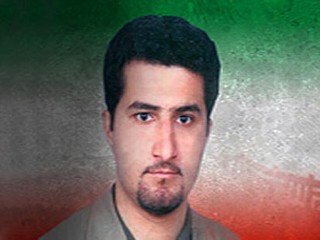
The story broke almost a year ago -- Iranian Foreign Ministry spokesman Ramin Mehmanparast claimed that Saudi Arabia
"has handed over Iran's nuclear scientist Amiri to America...he is among 11 jailed Iranians in America"Now we know that that is untrue, and Iran as a lot of egg on their face. Especially after Iranian Foreign Ministry spokesman Hasan Qashqavi maintained that:
"Amiri's fate is Saudi Arabia's responsibility."In a massive coup for the CIA, Amiri (as reported by ABC news) voluntarily defected to the CIA while on Hajj in 2009, after a long courtship with the CIA through intermediaries inside Iran. He has, for the past year...
(more after the break)
UPDATE at 2:00 PM EST
Iran has informed the IAEA that they will begin enriching uranium to 20% starting tomorrow.
UPDATE at 1:24 PM EST
Iran's supreme leader has threatened violence if planned opposition marches lead by Mir Houssein Musavi are carried out this week. Iranians will "punch [them] in the mouth to shock them" Ayatollah Khamenei promised -- though he demurred over who "them" is -- the protesters, their leadership, or the "western puppet-masters" he claims are instigating their "counter-revolutionary" behavior.
News on Iran's next move continues below.
From Reuters India:
TEHRAN (Reuters) - Iran will soon unveil a domestically-made air defence system with at least the same capability as Russia's S-300 anti-aircraft hardware, an Iranian air force commander was quoted as saying on Monday.For months, Iran has been attempting to...
 Labels:
air defense,
Iran,
IRNA,
Israel,
Jeff Schneider,
nuclear weapons,
Reuters,
s-300,
sanctions,
Vali Nasr
|
Labels:
air defense,
Iran,
IRNA,
Israel,
Jeff Schneider,
nuclear weapons,
Reuters,
s-300,
sanctions,
Vali Nasr
|
 0
comments
0
comments
From CNS News:
According to a Jan. 28 translation from BBC Monitoring Middle East, Ahmadinejad spoke on official Iranian television, saying that this year’s “Ten Days of Dawn” celebration, marking the anniversary of the country’s Islamic Revolution, would see the “demise” of the American system.Big talk from a big talker, but unfortunately we have to take him seriously. President Ahmadinejad seems to take his nation's birthday seriously, having already begun the executions of 9 dissidents in the lead up to the big party -- I'd hate to see his advent calendar.
“I believe that 22 Bahman [ February 11 in the Persian calendar] this year marks the demise of the liberal capitalist system.” Ahmadinejad said.
Well, the blogosphere has lit up with speculation as to what exactly Iran plans to do this Feb. 11 to strike a blow against the liberal capitalist system. Will it be a nuclear test? Doubtful. Unless the Islamic Republic has rapidly sped up enrichment, they are in no shape to detonate anything. So what?
More on this to come, I promise -- but keep your eyes open people, Iran has asked for your attention.
Iran’s pursuit of a nuclear weapon threatens to ignite a nuclear arms race across the Middle East. The U.S. cannot tolerate the level of instability that would result from Middle Eastern states developing nuclear weapons, as the region remains vital to the energy security of the United States. Sanctions placed on Iran by the international community have thus far been unable to force Iran into a position where it is willing to seriously negotiate. It is my opinion that more direct action is needed to force the hand of Iran’s leaders.
Iran perceives itself as being a rising regional hegemon and is determined to play a dominant role in the Gulf. The Iranian state believes that the United States is intent upon acting on its stated policy of regime change in Iran and thus views the U.S. presence in Iraq and Afghanistan as the greatest threat to its national security. Iran also sees itself as being surrounded by unfriendly neighbors, two of whom –Israel and Pakistan- are armed with nuclear weapons.
Available intelligence suggests that Iran is pursuing a nuclear weapons program. This evidence includes:
- Iran’s building of a nuclear enrichment plant in the desert at Natanz. The facility is designed to house 54,000 centrifuges but only 8,000 are believed to be operational. The fact that this facility has been converted into an underground bunker and is surrounded by antiaircraft guns strongly suggests that the nuclear activities contained within are not IAEA compliant.
- Data extracted from Iran’s computer networks in 2007 showed the Iranians to be in possession of blueprints for a nuclear warhead.
- The recent discovery of a hidden nuclear enrichment plant located inside an Iranian Revolutionary Guard base about 20 miles from the town of Qum.
While the previous administration recognized the Iranian threat, the Bush policy of placing conditions on negotiations has only allowed the Iranians to progress further on their timeline toward achieving a weapon. Furthermore, what seemed like early success on the part of the Obama administration in getting the Iranians to return to the negotiating table was actually just another attempt at stalling.
While air strikes have long been the solution of choice for dealing with Iran's nuclear program, expert analysis has shown that at best a coordinated air strike would merely delay Iran's acquisition of a nuclear device by approximately three years. Secretary if Defense Robert Gates is also an advocate of this analysis. I propose that the US use "smart power" instead to drive the Iranian economy to near collapse through a "Price Attack."
While Iran’s pursuit of a nuclear weapon appears likely, I believe that Iran’s desire for nuclear energy is genuine. Oil industry experts are predicting that Iran’s oil exports will decline to zero by 2014-2015. This comes as a result of domestic energy demand growth (6.4%) exceeding supply growth (5.6%) every year since 1980. Iran’s dependence on its shrinking oil export revenue suggests that the regime may be more vulnerable than previously believed.
Iran’s oil export crisis is a strategic opportunity
- The US should undertake a non-violent economic attack on the Iranian government that seeks to collapse their economy thereby denying them the resources to pursue a nuclear weapons program
- A price attack seeks to erode market power and reduce the price of oil. This can be accomplished through the adoption of increased fuel efficiency standards that overtime will decrease the demand for oil and force cartel producers to defend price by reducing supply. This is exactly what happened to Saudi Arabia in the 1980’s. Eventually Saudi Arabia was forced to increase production in order to reclaim market share and stave off bankruptcy, which caused the price of oil to drop further
- The goal of a price attack would be to force Saudi Arabia to repeat this behavior. As a result, Iran’s oil revenues would collapse because unlike other OPEC countries, Iran cannot increase production to compensate for falling price due to its crumbling infrastructure
- According to a report published by the National Academy of Sciences, a 50% increase in U.S. fuel efficiency standards would be enough to lower global demand by 2%-3% in 5-7 years, which historically has been enough to trigger a price defense by the cartel
Policy Implications
- Likely to constrain Iran in the long run, while simultaneously yielding monetary savings for the U.S.
- There is a chance that the price attack may be too successful and lead to the complete collapse of the Iranian state resulting in a regional power vacuum
- Policy relies upon Iranian oil exports continuing to decline due to a lack of investment in infrastructure. However, Europe and China continue to defy sanctions by investing in Iran’s energy sector
Labels:
Arms Race,
Iran,
Jeremy White,
Middle East,
nuclear weapons,
nukes,
Oil,
Price Attack,
Smart Power
|
0
comments
Stay in the Loop!


 Posts
All Comments
Posts
All Comments
Our Favorite Blogs


.jpg)