Louisa Seferis
Demagogues and Dictators Sudan Analyst
Beginning Sunday April 11, Sudan will hold historic national elections – the first in 24 years. As expected, the buildup to the elections has been fraught with inconsistency, opacity and contention. President Omar al-Bashir’s main political opponents – except for one party – have withdrawn at all levels because of fraud. Only minor opposition parties remain in the presidential, parliamentary, and state polls in the northern areas. (South Sudan will have its own regional voting structure, making these polls extremely complicated.) What’s worse, EU election monitors in Darfur left due to insecurity, proclaiming they had never been treated so badly. Indeed, Bashir doesn’t seem to want to make friends: the BBC quoted him as saying that if the observers intervened in Sudan's affairs, "we will cut off their fingers and crush them under our shoes."

This is actually old news. As Reuters reported Friday, “Sudanese activists say the irregularities began with a flawed 2008 census, demarcating electoral constituencies and fraudulent voter registration.” A lovely example of this is when more than 1,900 security force members were registered to vote at a tiny police post in Khartoum where only five policemen were officially stationed. Sudanese civil society organizations continue to report outrageous situations like this one, but they fall on national and international deaf ears.
Simply put, Bashir refuses to delay the elections so he can check them off his list and use the event as political leverage later. It is difficult to accuse a sitting head of state of committing war crimes and crimes against humanity at the International Criminal Court if he wins “democratic” elections, no matter how fraudulent.
And these elections will go through. The polls are already underway, and although the U.S. and others (EU, UN) have expressed dismay at Bashir’s unwillingness to postpone the elections, the stakes are not high enough for them to interfere – if Afghanistan’s elections took place, so will these. The world is more interested in the referendum for South Sudan’s independence than anything else, and Bashir is dangling this in front of the international community. The BBC reports...
 Labels:

By: David Schoeller-Diaz
Over 10,000 phone messages reportedly arrived at the Colombian Presidential Palace within 24 hours of the long awaited Constitutional Court ruling, which barred President Uribe from seeking a second reelection by a 7-2 vote. Coming from the Press Chief we can accept the figure as embellished, but nonetheless points to the strong emotions involved.
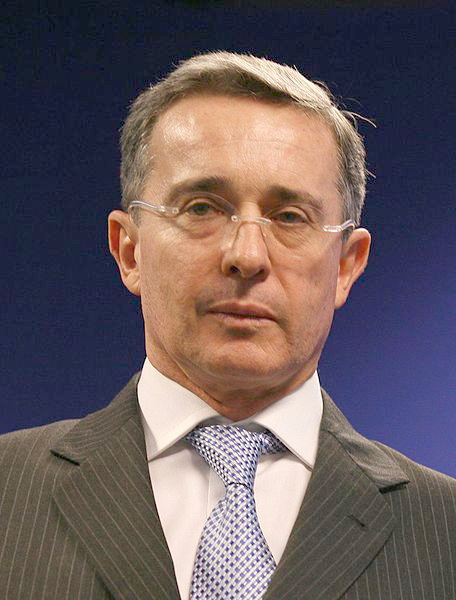
For long, Colombia has had a paradoxical democracy, simultaneously one of the most resilient in Latin America with a rare history of virtually uninterrupted elections, and fraught with chronic political violence for over 50 years. While a democratic tradition solidified early on, the state never acquired the heavy-handed measures of most countries in the region to enforce their authority and provide necessary social services throughout the territory. In other words, while Colombia has been truly privileged to circumvent the grueling struggle towards democracy, effective nation building never reached far beyond the major cities allowing illicit activity to flourish. The tough terrain and decentralized character of Colombia make it extremely difficult for a non-state army to existentially threaten the government, and for the government to patrol its frontier lands against insurgents, paramilitaries, or drug trafficking.
Álvaro Uribe, the Harvard and Oxford-educated Governor of Antioquia, was elected at a time when most Colombians were saying “No Más”, following two highly ineffective Presidents.
Stay in the Loop!


 Posts
All Comments
Posts
All Comments
Our Favorite Blogs


.jpg)