 I've been following the scandal surrounding the remarks of General Stanley McChrystal fairly closely and have a few thoughts to add to the discussion kicked off by Jeff. I'll leave the decision of whether to sack McChrystal to the President, who said today he will make the opinion based on "how [he] can make sure that we have a strategy that justifies the enormous courage and sacrifice that those men and women are making [in Afghanistan]," but I don't think that the issue is the same kind of Rubicon-crossing challenge to the chain of command that Jeff implies in his post.
First, a few misunderstandings bear some brief analysis:
1) General McChrystal will almost certainly offer to resign, but President Obama's acceptance is far from certain.
2) General McChrystal is not new to the media. With fellowship stays at Harvard's Kennedy School of Government and the Council on Foreign Relations, as well as briefing the press during the Iraq invasion as the Vice Director for Operations on the Joint Staff, McChrystal should know the media quite well.
3) The vast majority of the quotes came from unsourced aides of McChrystal, not the general himself. TPM has a good summary of the most damning quotes from McChrystal's "Team America." This doesn't excuse their comments, or those made by McChrystal himself, but the Rolling Stone story wasn't just a profanity-laced interview by McChrystal, as some have made it out to be.
3-a) It is okay to vent and blow off steam, even regarding one's superiors, in a high-stress environment like Afghanistan. Doing so is natural, healthy, and far from an offense against the political order or the UCMJ. But that only applies when one does so privately. When you do so on the record to a reporter, no excuses apply.
Simply put, if the President is to fire his commander in Afghanistan, it should be for gross negligence, not purposeful insubordination. General McChrystal showed extremely poor political judgement in allowing the Rolling Stone reporter close access and allowing his staff to vent their frustrations on the record. Some might argue that McChrystal's job as a military commander is not to be political, but I don't think that argument is very strong when you're in a Senate-confirmed position leading the highly visible campaign in Afghanistan.
Of course this latest kerfluffle comes after a similar public disagreement last fall, when McChrystal was publicly chided for contravening his superiors during the President's Afghanistan Policy Review. In the end, President Obama's decision depends on whether he gives McChrystal a second (or fourth, depending on your perspective) chance. We'll see tomorrow.
Gen. Stanley McChrystal is ISAF Commander no longer -- at least that's what an unnamed TIME source is reporting.
If he hadn't resigned willingly, he should have been fired. If he resigned under pressure, he got off light. (For those of you living in a cave somewhere, go check out Rolling Stone.)
This morning Gen. Stanley McChrystal was flying home -- past the point of no return. But unlike in 49 BC, this time Caesar's army stayed at the front. The comparisons are flying fast and loose out here in the blogosphere, but whether the new crisis between Pres. Obama and his Afghan commander is the modern parallel of McArthur and Truman seems less important that what has actually happened in the past 24 hours.
Sure, it is satisfying (and required) to berate the General's apparent disdain for things like chain of command and those who disagree with him.
It is fitting to point out that for a special forces guy, McChrystal sure seems to love the media.
It is infuriating that for the second time in a year he has fundamentally challenged the authority of both the SecDef and POTUS in a very public way.
And he should be (and now is) gone.
While, according to this profile, he is apparently no stranger to bad romance; why McChrystal chose to deliver his resignation letter in the Lady Gaga edition of RS is a question for other pundits, the real question, in my mind, is: what now?
ISAF is without a commander, and after a year of taking body punches from the political right on his war decision making, President Obama and Secretary Gates can ill afford a lengthy interview process to pick his successor.
The pick, however...
 This week, US Forces withdrew from Afghanistan's Korengal Valley -- known more commonly to those who served there as "the valley of death". It is a story that has landed relatively quietly in the US media, and deserves much more attention.
US troops arrived in the Korengal in 2005 -- they moved in, claiming the high ground of the tiny, isolated valley, and prepared for an impossible mission. The strategy was for those soldiers to draw the fire and attention from Taliban and foreign fighters who sought to enter into Afghanistan from the Pakistani theater via the .8km-wide valley.
The goal was not to secure the valley, nor to block the valley's entrance. The goal was to tie up insurgents in a battle away from more populated regions of Afghanistan.
The goal was put quite frankly by the Washington Post:
"The troops were, in essence, bullet magnets. "Since 2005, over 40 US soldiers have been killed, hundreds wounded. The soldiers were met by daily small arms fire, ambushes, IED attacks, and mortar fire from the surrounding hills. Some of the fire came from Taliban, more from local insurgencies who sought to oppose the central government's expanded control over the remote valley -- filled with 5,000 fiercely independent Korengalis -- who speak their own language, and follow many of their own customs.
This year, a new command structure in Afghanistan has come to the conclusion that ISAF operations in Korengal run higher risks than rewards. The conclusion was that Capt. Mark Moretti's troops in the valley had not stumbled not into a hive of Taliban insurgency, but an internecine blood feud between Korengalis, who sought, above all, to be left to their own devices.
(more after the jump)
The focus of the U.S. Military in Afghanistan has apparently shifted towards Kandahar. General McChrystal recently declared that the operation has already begun. But what about Marjah? Only recently it was the primary theater for U.S. forces, and, as written here, the real struggle began after kinetic operations ended. So now, at the most important juncture, why are resources and attention being pulled elsewhere? There are numerous outstanding issues in Marjah, and neglecting them now will undermine any progress made in the past.
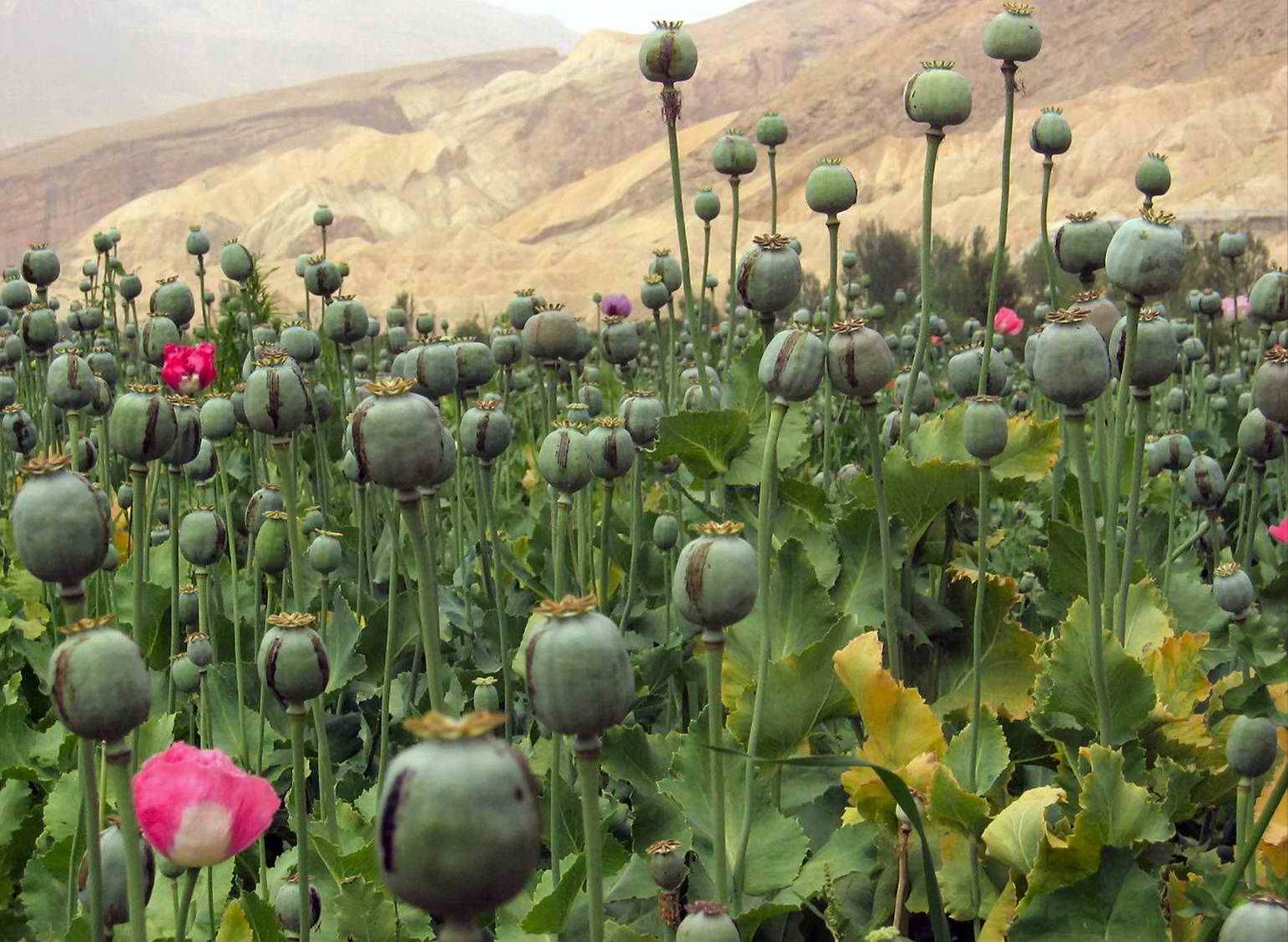
It's important to understand that farmers do not become wealthy by growing opium. They do it because it is a hardy crop and in times of insecurity is a reliable producer of enough cash to survive. The illicit wealth goes to a myriad of middlemen, from local drug runners and Taliban enforcers to international smugglers and distributors. These middlemen often coerce farmers into growing poppy. In areas where the Afghan government's writ is circumscribed, local Taliban sometimes require local farmers to plant opium, and threaten punishment if they do not deliver a satisfactory output after the harvest.
When viewed through this prism of desperation and coercion, it becomes clear that benign neglect from coalition forces is not sufficient to address the problem.
 Labels:
Afghanistan,
Dave Reidy,
governance,
Marjah,
opium,
Security,
Stanley McChrystal,
Taliban
|
Labels:
Afghanistan,
Dave Reidy,
governance,
Marjah,
opium,
Security,
Stanley McChrystal,
Taliban
|
 0
comments
0
comments

The 17,500 NATO and Afghan Troops ringing the Helmand town of Marjah have begun the long planned offensive into the Taliban stronghold in southern Afghanistan. While the unfolding battle is being covered reasonably well by Reuters, the WSJ, and Pakistan's Daily Times, please stay with us here at D&D for our analysis and reporting as well.
In my eyes, there are several important stories coming out of Operation Moshtarak that are secondary to the combat, but may have far reaching importance in the future of COIN. The first is the long planned instillation of the so-called "government in a box" for the post-conflict scenario in Marjah. Should the NATO/Afghan forces secure the city through traditional sweep, clear and hold tactics -- the second stage of the operation is the instantaneous insertion of pre-planned governance to fill the vacuum in Marjah. I think I can safely say the eyes of COIN theorists everywhere will be fixed on this phase of the operation -- which could become a centerpoint in the Obama Administration's Afghan strategy. It is true that while the NATO/Afghan forces are not outfought by the Taliban, they have most definitely been out governed, something that Operation Moshtarak may begin...
Labels:
COIN,
Jeff Schneider,
Marjah,
NATO,
Operation Moshtarak,
Stanley McChrystal,
Taliban
|
0
comments
Stay in the Loop!


 Posts
All Comments
Posts
All Comments
Our Favorite Blogs


.jpg)