When Robert Pape writes something on terrorism, I pay attention. He always adds something to the discussion, and usually it's something valuable. But his recent article on FP.com, "It's the Occupation, Stupid" delivers research results and leads the reader to an uncertain conclusion. His argument holds that terrorism, especially suicide terrorism, is motivated by foreign occupation. These findings, based on his research at the University of Chicago, make logical sense: of course people in an occupied territory resort to violence when all other means have been exhausted. His conclusion from this study, however, is problematic. Taking these findings to their logical end, Pape says
The research suggests that U.S. interests would be better served through a policy of offshore balancing.This is true, but interpreted incorrectly can lead to a dangerous isolationism. Pape is right that the War on Terror is self-defeating, and that having boots on the ground overseas can often be counterproductive. He is also right that occupying foreign territory provokes deadly blowback. But there are two important nuances to this argument:
1) Avoiding foreign occupation is not the same as withdrawing into isolation
2) Offshore balancing requires U.S. involvement and action in foreign countries, which could also instigate blowback.
First, it is important to recognize the difference between offshore balancing and isolationism. It is tempting to extrapolate from Pape's argument that retreating into "Fortress America" is the wisest course. But withdrawing from the world would not make America safer, and furthermore, in this global age, is impossible.
Secondly, offshore balancing implies U.S. power projection overseas and involvement in the affairs of other states, and that doing so is in the best interests of Washington. This could take the form of drone strikes, Special Operations raids, or even 1990's-style cruise missile attacks. But this involvement could have a similar effect as foreign occupation: motivating terrorists. This is a hole in Pape's data, and until further investigated remains a concern.
There is no question that Pape's overall point is correct: foreign occupation is a major driver of terrorism, and removing boots from the ground is preferable. But he would be wise to avoid leaving open the possibility of interpreting his findings to support isolationism.
 Labels:
Afghanistan,
Dave Reidy,
Iraq,
occupation,
Robert Pape,
suicide terrorism,
terrorism
|
Labels:
Afghanistan,
Dave Reidy,
Iraq,
occupation,
Robert Pape,
suicide terrorism,
terrorism
|
 2
comments
2
comments
The July 11 attacks by the Somali Islamist group Al-Shabaab killed more than 70 people watching the finals of the World Cup in Kampala, Uganda's lakeside capital city. The tragic bombings, and the response, have brought up an interesting issue in the field of international security - why countries react in different ways to terrorist attacks.
On one end of the spectrum is Spain's reaction to the March 11, 2004 attacks by "homegrown" Al-Qaeda members on the Madrid subway (Ed. note - why do so many terrorist attacks happen on the 11th day of the month?). The attacks occurred shortly before the 2004 parliamentary elections, and led to Jose Luis Rodriguez Zapatero's party, known by its Spanish acronym PSOE, taking power from the Conservative Jose Maria Aznar. In the aftermath of the election, tinged by Aznar's contention that the bombings were caused by the Basque separatist group ETA, Zapatero's government withdrew Spanish troops from Iraq.
On the other end of the spectrum is the U.S. reaction to the September 11 attacks in 2001, with a death toll of over 3,000. Within a month, after the Taliban refused to turn over Osama Bin Laden and other Al-Qaeda members, U.S. and allied forces had entered the country. On October 7, 2001, airstrikes began in Kabul. U.S. troops are still in Afghanistan today, 105 months after the initial invasion. 9/11, far from deterring future action, led directly to the U.S. invasion of Afghanistan.
In reacting to the 7/11 attacks, Uganda's government has remained uncowed, despite being singled out for attack by Al-Shabaab because of the presence of Ugandan peacekeepers in Somalia. President Yoweri Museveni was defiant, stating that "we shall go for them wherever they are coming from. We will look for them and get them as we always do." Although this rhetoric is not likely to be backed by immediate military action, Museveni's words are no retreat. In fact, he has already hinted at changing the mandate of the African Union peacekeeping mission in Somalia to one of "peace enforcement." Such a shift in the rules of engagement would allow for a more proactive military effort against Al-Shabaab.
Leaving aside the (important) question of why Al-Shabaab would attack Uganda or what their broader agenda may be, why did Uganda react in this way, and why do countries react so differently when responding to terrorism?
 America's next act of terrorism will be domestic.
With the passing of health care reform in the US House, the rhetoric emerging from the American political right has reached new heights. From the yelling of Minority Leader "Hell No You Can't" Boehner in the House to the homophobic and racial slurs hurled by protesters outside the capital building, one thing has become even more clear: as the more mainstream conservative movement becomes more frustratedly vocal, the likelihood of domestic terrorism has unintentionally risen, and has done so exponentially.
While the attack will not come from the Tea Party proper, more radical members and affiliated groups that have allied themselves with the movement are beginning to mobilize.
The fringes are restless.
Worse yet, the fringes have been empowered by a frustrated conservative mainstream desperate for popular support. Now, conservatives may have whipped up the kind of anger that cannot be put back in the bottle. What began as the corporate funded, Dick Armey led, FreedomWorks organized, anti-health care rallying Tea Party movement has grown into...
A bomb in Pune at the German Bakery killed 9 people and injured 57 more on Sunday. India is sadly no stranger to terrorism, but this attack, which is thus far unclaimed, proves that terrorist groups still have the capacity to initiate attacks inside India and brings troubling ramifications for India and the West.
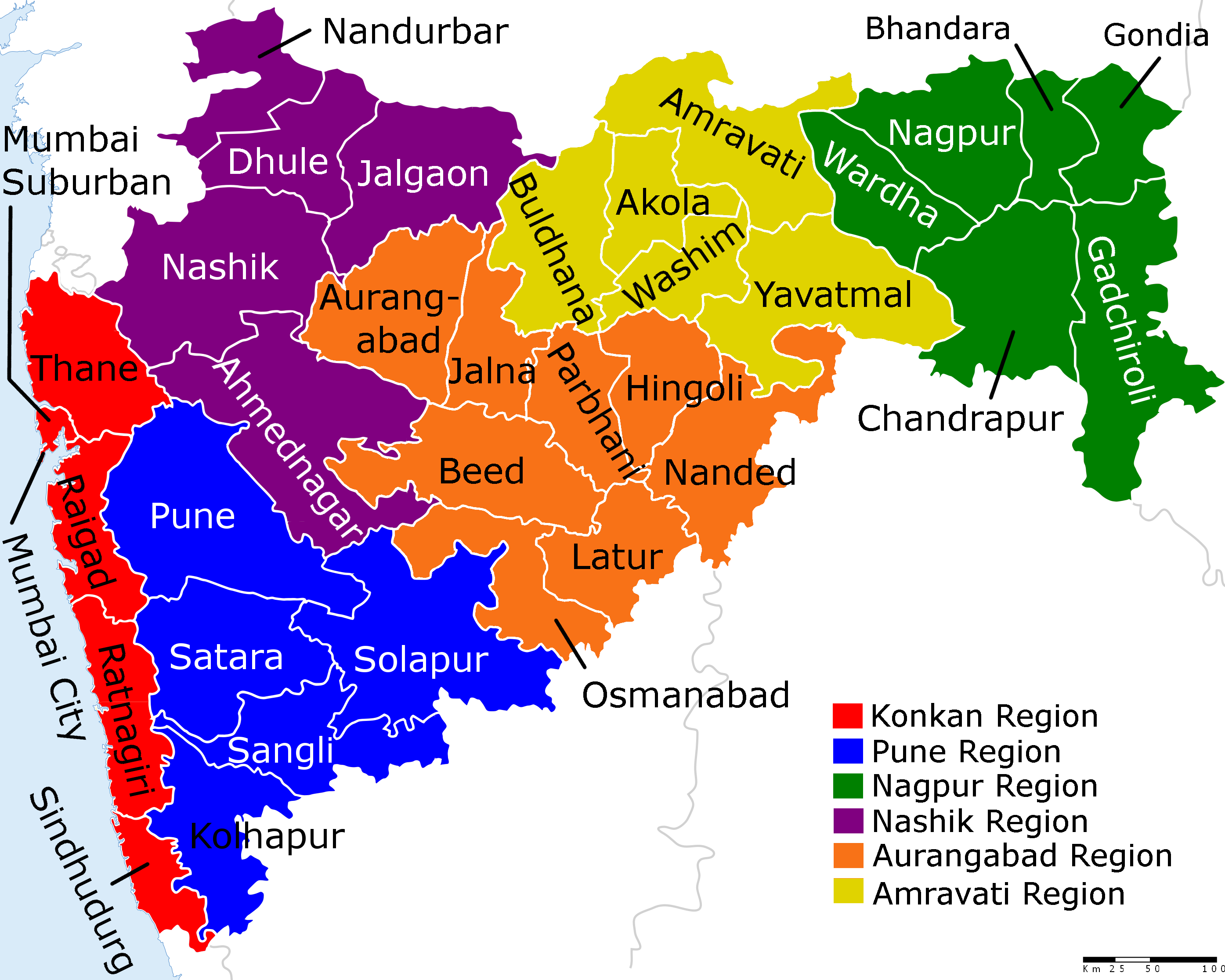
At first blush, last weekend's attack on the German Bakery in Pune seems similar - attacking a spot always flush with foreigners. However, the demographics of the German Bakery set it apart from the Mumbai attacks.
As someone who regularly carries around Arabic flashcards in his pocket (I can now count to 100…. wahed, ithnayn, thalatha….), I was quite alarmed to see this story about the apparent detention by TSA of a student for carrying flashcards in “the language Osama Bin Laden speaks.” Obviously, this is messed up (assuming that the student in question’s side of the story is somewhat accurate) – for a couple of reasons.
First of all, speaking Arabic and being a terrorist is not the same thing, and TSA of all agencies needs to understand this. Second, blatant disrespect for and marginalization of Arabic speakers contributes to the radicalization of these individuals. As Jeff points out, the trend of third generation self-radicalized terrorists is increasingly the major terrorist threat to the United States, and is often exacerbated by US policy actions. Lastly, I believe it is crucial that the US government encourage more individuals to learn Arabic, rather than tolerating a bureaucratic culture that believes Arabic is somehow antithetical to American society.
The team at Democracy Arsenal has a great catch on a minor detail from the most recent DNI Threat Assessment. In short, it notes that Hizballah is not actively planning terror attacks against the U.S.
While this would normally fall in the domain of my esteemed colleague, "Angry" Jeff Schneider, the Czar of Terror and Intelligence (like Mike Fratello, but even better with the Telestrator), it's simply too juicy for me to pass.
Too often we just talk about "terrorists" and the presumed existential threat they represent. Not only is it foolish to describe a group solely with the term terrorist (it's a tactic, not an ideology!), but the connotation also lumps together disparate groups, many of whom actually hate each other. By recognizing that Hizballah has not engaged in attacks against the U.S. in 13 years, and confirming that intelligence indicates no future attacks are forthcoming, DNI is taking a small step towards eliminating our over-reliance on a nonsensical term which obscures our understanding of the actual threats we face.
I'm not attempting to rationalize or excuse past actions of Hizballah - there is no way to justify atrocities they have committed. However, recognizing that organizations change and evolve and that Hizballah no longer represents a direct threat to the U.S. means that we can better allocate resources and focus on those groups that do still actively seek to harm us. Good for DNI to have the courage to make that differentiation.
I was planning to write a piece to supplement my last post and argue that Umar Farouk Abdulmutallab, everyone's favorite underwear bomber, was a perfect example of why utilizing the criminal justice system for terror suspects was the right decision. However, I discovered that Adam Serwer over at TAPPED already wrote the exact same piece, and wrote it better than I could have done. So instead of reinventing the wheel, I highly recommend you all check him out.
Additionally, in response to my previous post, my colleague "Angry" Jeff Schneider raised a few excellent questions about the feasibility of trying terror suspects in court. He first questioned if it was even possible to give prominent terrorists, like Khalid Sheikh Mohammed, a fair trial. I believe it is. Jack Goldsmith over at Slate gives a nice run-down of how the legalistic issues, such as an impartial jury, can be solved. Steven Simon also makes the case that there is sufficient evidence that is unclassified and "clean" (i.e. not obtained through torture or other illegal means) to secure a conviction under standard legal rules.
I think this also speaks to Jeff's final point, about the danger of it become a Stalinist show trial. I agree that the possibility exists, and it would be a huge problem for the U.S. if the proceedings are perceived that way. In fact, it would be a national security issue, as I addressed previously. However, I believe that, once the case goes to court, it will be conducted in accordance with the legal principles of the U.S., which ensures fairness and equality, and that this will be plainly evident to all observers. If the concern is about perception, even a flawed trial is better than indefinite detention. In short, I still think trying KSM in a civilian court is the right decision.
Tonight's Huffington Post headline reads: "America's Once Secret War in Pakistan Busts Wide Open". I must admit, I saw, I was intrigued, and I clicked. The story is one of tragedy.
"(AP/Huffington Post) -- SHAHI KOTO, Pakistan — A roadside bomb killed three U.S. soldiers and partly destroyed a girls' school in northwest Pakistan on Wednesday in an attack that drew attention to a little-publicized American military training mission in the al-Qaida and Taliban heartland."At first blush, a shocker. The US has very publicly not sent active-duty combat troops into Pakistan, at the demands of the ISI and Pakistani Government -- not to mention for lots of other reasons. My first question: what were these soldiers doing in Shahi Koto? The answer is buried well below the fold in the HuffPo story:
WELL. If a headline was ever duplicitous, demagogue-ish, and plain wrong, this is it. A secret war in Pakistan? Not so much. Evidently the Huffington Post decided that research was over-rated. They could have looked here, here, or here -- and found out that there were US Military Advisers training Pakistani Troops. Not only were these stories published in 2009, but they were the top results in a search I did using the Google. Do the editors at HuffPo read the NYT?"The soldiers were part of a small contingent of American soldiers training members of the paramilitary Frontier Corps, Pakistan's army and the U.S. Embassy said. The mission is trying to strengthen the ill-equipped and poorly trained outfit's ability to fight militants.
The soldiers were driving to attend the inauguration of a different girl's school, which had been renovated with U.S. humanitarian assistance, the embassy said in a statement."
How's that research department working for you, Arianna?
But then, the ultimate shocker -- within the report itself, we have the blunt assessment from the always diplomatic Richard Holbrooke:
Holbrooke also said the U.S. has not tried to hide its training mission with the Pakistani military."
"There is nothing secret about their presence there," he told reporters in Washington."
Amen Richard, amen.
We have, in this country, a cult that fetishizes the revealing of secrets. Sometimes it is a good thing -- Woodward and Bernstein, Tobacco Whistle-Blowers, and Tail-Hook -- but sometimes its a very, very, bad and dangerous delusion -- Birthers, Birchers, and recent Nick Cage movies.
But when it comes to US Soldiers in the field losing their lives, that is what the story should be about. Lets focus on what is important, and honor them with just the facts, and only the facts.
Khalid Sheikh Mohammed, Umar Farouk Abdulmutallab, and anyone else apprehended and suspected of terrorism should be openly tried in a civilian court. Forget all the legal arguments and debates – this is about national security. The best way to ensure the safety of the U.S. is to give these men their day in court, in public, and allow the legal system to run its course.
You’re all familiar with the arguments against allowing suspected terrorists in court – it will turn into jihadi propaganda, it will compromise intelligence sources, and it limits our ability to interrogate terrorists. Steven Simon does a thorough job demolishing those falsehoods, but even without his well-reasoned defense of the judiciary a higher priority should compel the Obama Administration to send all detainees directly to court.
Despite what some pundits and politicians may tell you, we are not fighting a Global War on Terror. Terrorism is a tactic – how can you declare war on a tactic? Osama bin Laden and his ilk use terrorism, but they are not defined by it. They seek to destroy the U.S., or at the very least curb its power and influence. This is their goal, not terrorism. They cannot do this alone – a few ideologues, no matter how dedicated, are incapable of bringing down a superpower. And they know this. To succeed, they must convince the rest of the world that America is not the benevolent leader it claims to be, but rather another imperialist hegemon bent on conquest and power. In other words, bin Laden and others are fighting a battle of ideas, and terrorism is only one of their many tools to win that battle. If we fail to acknowledge that we are in a war of ideas, not a War Against Terror, we are destined to lose. By detaining and denying people the right to trial, we give undermine our position make ourselves more vulnerable.
When we abandon our ideals – democracy, freedom, and basic human rights – we help Al Qaeda make their case. The best recruiting tools extremists have ever possessed were the photos and stories that emerged from the prisoner abuse scandal at Abu Ghraib. If we want to win this war of ideas, we need to demonstrate that what happened at Abu Ghraib was a tragic mistake, not an indicative behavior. Keeping prisoners locked in military detention without charge or trial reinforces the negative image of the U.S. that bin Laden cultivates and strengthens his position. Fair and open trials send the exact opposite message – America is a just nation of laws and respect, not an imperialist power, and that it is bin Laden who is ideologically bankrupt.
If the Obama Administration is serious about protecting America, then they need to ensure that all detainees receive their day in court. It’s not about the legal minutia; it’s about national security.
The chattering classes love to play up the existential threat Al Qaeda poses to the United States. Nevermind that their greatest success, 9/11, managed to kill less than 3,000 Americans and that they have since been unable to strike a major blow against the homeland. Terrorism has become the front-line foreign policy issue, despite the fact that AQ and their ideological brethren are just that - terrorists, not destroyers of nations.
I don't mean to downplay the significance of 9/11. It was a horrific event, and every one of the 2,973 innocent deaths was a tragedy. However, it was never going to cause the collapse of the United States. Tragic, yes; existentially threatening, no.
And now, rapidly approaching the ten-year anniversary of 9/11, the hollowness of AQ is becoming evident. The organization we all feared has been exposed as nothing more than a few misguided ideologues and incompetent bumblers. AQ is not a nightmare combination of the Nazis, SPECTRE, and Stalinist hardliners; in fact it is far closer to the Three Stooges in operational ability. The exploits of the "shoe bomber" Richard Reid and the "Undie-bomber" Umar Farouk Abdulmutallab make 9/11 appear to be a once-in-a-lifetime success for AQ, driven by good fortune and luck rather than evil genius.
As if to confirm these diminished capabilities, an audiotape purportedly from Osama bin Laden recently surfaced to praise the actions of Umar Farouk Abdulmutallab. As is his style, bin Laden does not formally claim credit for the act, but heralds it as a reaffirmation of the message of 9/11 and promises more attacks. At first glance this seems a chilling reminder of AQ, lurking in every shadow and airplane bathroom. But a closer read reveals the emptiness of the message.
First of all, some analysts question the authenticity of the tape - is that really bin Laden, or a shallow impostor? More importantly to my mind is the underlying question of why. Why would bin Laden, the scrounge of the West and would-be slayer of imperialists, take to the airwaves in praise of someone who manged only to light his privates on fire before being subdued by unarmed civilians?
Perhaps the tape isn't from bin Laden because he is long dead or stuck incommunicado in a remote cave. Or, maybe AQ does not have the ability to mount a successful operation inside the U.S. and has resorted to grabbing at any publicity it can in an attempt to remain relevant. Either way, it should be clear that our deadly adversary needs to be redefined. It is not an existential threat, it is a criminal nuisance.
There will always be terrorists and terror attacks. If AQ is no longer a significant player there will be other groups to take it's place. But terror is not a phenomenon confined to Islamic fundamentalists or bin Laden's disciples; who can forget Timothy McVeigh or Aum Shinrikyo? We need to portray and understand terrorism for what it truly is - a source of tragic deaths, but not the potential downfall of the nation.
I'm almost afraid to wade into this issue, as I'm sure I will anger many (I invite your comments!), but this issue is too important NOT to post on. Below is my analysis of the Obama Administration's decision to try Khalid Sheikh Mohammed in a civilian courtroom in lower Manhattan.
Is Khalid Sheikh Mohammed a criminal? Yes -- and, in a perfect world, he should get his day in court. He should be tried by an impartial jury lead by an impartial judge, and legally collected evidence should be presented for and against his guilt. The findings of the court should reflect the strength of our constitution -- finding someone guilty of a crime despite all of the protections afforded the accused.
How beautifully normative -- huh?
But we have problems here. Alot of them.
The Obama Administration has put on their normative caps (something I usually applaud) for exactly the wrong issue, at exactly the wrong time. Unfortunately, they have also pinned alot of their credibility and political capital to this trial.
Beyond moving the trial to the remotest corner of the globe, into a village without Internet, TV, radio, telegraph, semaphore, or word of mouth -- you are not going to find an impartial jury, much less an impartial judge. By holding the trial in Lower Manhattan a few blocks from ground zero, you raise the absurdity of this fact. Anyone who can swear in court that they are able to render an impartial verdict for KSM (especially in NY) is a liar. Can you bar the jurors from visiting something as innocuous as wikipedia?
Then there is the "evidence" issue. Will the transcripts of KSM's Gitmo interrogations be allowed? How do you transliterate the sound of water flowing over someone's gagged mouth? I would think that any lawyer would argue that there are some serious 4th and 5th amendment issues at play there. Should a judge rule that they are admissible, can a proper chain of custody be established over the content of the transcripts without violating alot of people's TS/SCI clearances?
Was KSM mirandized?
What evidence can be presented in open court? Will the government be granting temporary clearances to the jurors?
But more importantly, this trial will run the risk of perhaps the greatest opportunity for jury nullification even witnessed. Will this be a trial of a Terrorist, or a trial on Waterboarding? Will this be a trial of the 9/11 plotters, or an indictment of Gitmo?
Ultimately, I think this unlikely. KSM will be found guilty because he is guilty, but the issue is this: if the result of the trial is a foregone conclusion, is it a trial? The jury, upon entering the courtroom will not be questioning KSM's guilt or innocence, but rather how long they have to sit there before they can say "guilty" and go home.
Will the US government be issued a gag order on talking about terror, al Qaeda, KSM et al. during the trial to avoid charges of jury tampering?
This will be a show trial. Which is the polar opposite of what the Obama Administration wants, and it is a tragedy. We cannot find him innocent -- but we cannot give him a fair day in court either. What kind of defense will KSM present for his actions? Even scarier, what kind of defense will he be ALLOWED to present?
Ultimately, I don't know how else we can approach this mess. It seems that if we are to try terrorists like KSM in civilian court, they must be treated as criminals from their arrest to their incarceration. Since the Bush Administration failed to do this, we cannot attempt to reverse engineer a trial for those detained before Obama took office. This is something it appears the current President is seeking to rectify with the UndieBomber, but will a free and fair trial for terror suspects even be possible in this media environment?
In the words of my colleague Jeremy, that's my 50 cents (inflation...)
If you've got a better idea, let me know.
From the ever-so 'pithy' Michele McPhee a conservative radio 'host' up here in Boston:
“As liberal a bastion as we are, I think people take umbrage, whether you are left or right, at Khalid Sheikh Mohammed laughing his head off in a taxpayer-funded cell at a billion dollars a year. Even the biggest moonbat can’t wrap their arms around that,” McPhee said. “It’s symbolic of how out of touch some politicians are.”
Oh Man!
Is the cost of Gitmo or a Supermax measured only in dollars and cents? While there are several valid arguments both for and against trying Khalid Sheikh Mohammed in civilian court (see my next post!), I think its important to approach this quote (and the general FOX News kerfufflery around trying KSM and the UndieBomber in civilian court) with the gravitas that it deserves:
Stop being silly.
Lets talk about cost-benefit here. We can calculate this in the nice quantifiable black and white numbers -- but we would be missing the whole picture. In the past few years, billions of dollars have been spent having KBR/Haliburton build up our internment facilities in Cuba, but the cost to the United States has been much more than the dollars spent.
As I mentioned in my earlier post, our past approach to shadowy apprehensions, semi-legal interrogation techniques, and secretive military tribunals has become a constant motivator and recruitment tool for Al Qaeda and its affiliated movements -- and has fueled dijihadis and third-generation self-starter terrorists around the globe.
But perhaps even more concerning, Guantanamo has become a recruitment center, training camp, and radicalization zone for all alleged enemy combatants -- whether they were rightly 'charged' or otherwise. It is an uncomfortable truth -- without due process or access to legal aid, many innocents have found themselves in Gitmo for a stay. How many walk out innocent is another matter. There has been, in the past few years, a steady stream of ex-Guantanamo inmates who have participated in 'martyrdom ops', or been arrested mid-plot. Still skeptical? Use the google!
Specifically, AQAP has been revitalized with ex-Gitmo recruits, and if you want a more direct example of what Gitmo may have cost us so far, the man who trained Umar Farouk Abdulmutallab (our least favorite example of the efficacy of Liar Liar Pants on Fire) was a former inmate at Gitmo.
AQAP's media wing Malahem has celebrated the impact that Guantanamo Bay has had on their recruitment and strength, most memorably in last year's video "From Here We Begin, at Al Aqsa We Shall Meet". In it, Abu Sufian al Azdi Saeed al Shihri (a former Gitmo resident) stated:
"We assure our leaders Sheikh Osama Bin Laden, may God protect him, and Dr. Ayman al Zawahiri, that we shall continue to follow the path of jihad. By God's will, our imprisonment has only made us more resilient and more committed to our principles that we fought jihad and were taken prisoners for"
al Shihri (by the way) is now AQAP's number 2. He has gone from Gitmo to XO quite fast.
But this is merely one example of what Gitmo has cost this nation. It has also driven a wedge between the US and it allies, and has soured many NGOs and IGOs about participating in stability operations in both Iraq and Afghanistan, where they are desperately needed. Today marks a year since President Obama pledged to close Gitmo in that time, and it is my hope that that pledge will be realized in the future. However, that leaves us with the most pertinent question:
What now?
While there are many things that can (and will be) said about the civilian trial of KSM, I don't think it particularly Moonbatty to think we need a new approach to how we deal with captured terror suspects -- one that does not fuel our enemies, or lessen our national security.
Dear Mr. Senator Elect: The “independent majority” thing aside, there are a few things you need to know before you decide to keep spouting off about waterboarding, Gitmo, that pesky ‘rule of law’ and civilian trials issue, and all the rest – you have toed your Roveian, Cheneyian line on “international” security, but, as Beau has so aptly pointed out here, you have a lot of flash, but not too much substance. Tonight, you told us that our "tax dollars should be spent on weapons to stop them [terrorists], not on lawyers to protect them." You need to think harder on this. Here are some things to think about: This has gotten serious. In the past few years, the number of plots targeting the West have originated not from the AQ hardcore in Waziristan, nor from AQAP in Yemen, but from isolated, online, angry groups of young men (and women) who seek to replicate the actions of the Global Jihad Movement. Waterboarding AQ Global Jihadis, detaining them, renditioning them, and disapearing them, will NOT deterr Al Qaeda's "new wave", instead, it will strengthen the movement. The “new wave” of Al Qaeda (if we can call it such) rising in the West is comprised of homegrown, self-radicalized Western citizens who have taken up the call to jihad. This new wave of Al Qaeda is decidedly different from past iterations in three primary ways: In the past seven years, multiple terror cells have been identified and neutralized in Spain, the UK, France, Belgium, Germany, Italy and Greece. Europe has also fallen victim to multiple terrorist incidents from the murder of Theo Van Gogh in the Netherlands, to the 7/7 and Madrid bombings in the UK and Spain. Each of these groups were comprised of European nationals who had self-radicalized, and carried out their attacks largely on their own initiative, without prompting or aid from Al Qaeda Central in Afghanistan/Pakistan. They are reacting to their families’ (only sometimes) perceived marginalization within Western European states, along with their perception of a Western waged War on Islam. Al Qaeda Central did not target these men for recruitment, but instead has, more recently, taken a passive approach to jihad – allowing their ideology and grand narrative to attract men like these to “apply” for training and aid only after they have self-radicalized and selected possible targets. It is likely that even without this training, these men would carry out attacks without any tangible aid from Al Qaeda – possibly with larger consequences, since many were identified and apprehended as a result of their travel to Pakistan, thus eliminating or mitigating their effectiveness. In fact, it stands to reason that Al Qaeda Central will continue to maximize its passivity with these groups, limiting or eliminating any direct geographic contact or tangible funding, so as to avoid future detection of their members by Western security personnel. While US military actions have, to some degree, limited the threats presented by groups like Al Qaeda Central to US civilians and critical infrastructure, these actions have had the opposite effect on radicalized and radicalizing individuals in Europe. The images of Americans killing Muslims (be they radicals or otherwise) inflames these young men, and further convinces them of the accuracy of Al Qaeda’s grand narrative. The presence of Western troops in Muslim regions further creates the perception of a Global Crusade, and provides these men misguided justifications for their own violent aspirations. These men are further radicalized by their own perceptions of being equal victims of Western aggression due to their own marginalization within European society. Furthermore, these men are able to act independently from Al Qaeda Central, and thus are not impeded by military actions intended to isolate men like bin Laden and al Zawahiri from their overseas cells. In fact, US military operations have strengthened these groups by swelling their ranks with local, home-grown recruits and financial sources. These new terror cells represent a clear danger to Western civilians. Not only are they not dissuaded or deterred by Western military operations and "quasi-legal" detentions, they are emboldened by them. Furthermore, they present a much more dangerous group of operatives, due to their familiarity with Western culture, language, values and local infrastructures. They are able to travel freely and covertly within the West, and are incredibly difficult to detect until they have entered the final preparations for their attacks. They present a challenge that cannot be defeated with military action. But, what can be done immediately to defeat the dangers presented by the UndieBomber and the serious cadres of ‘angry young men’? How can the threat they present be mitigated, or stopped altogether? It seems to me that the answer lies in 3 key areas: The first two are too technical to enter into here (A Retasking of HUMINT, SIGINT, and Digital Monitoring). The third, sir, rests squarely in your bully pulpit’s jurisdiction. The application of intelligence gained from new SIGINT and HUMINT sources will require the creation of new frameworks for cooperation between intelligence communities, local law enforcement, and judiciaries to ensure that these individuals and groups are neutralized through constitutional means, denying the dijihad of any examples of perceived Western anti-Islamic aggression or racial hypocrisy. In this, transparency will be key in shaping the perceptions of minority populations within the west. This effort is critical, since a failure to accomplish this goal will result in the ‘hydrafication’ of Al Qaeda-oriented terrorism. Should one head be cut off poorly, two may grow in its place. These actors must be proven criminals, not ‘disappeared martyrs’. The process in which these self-starters are neutralized must be seen as objective, swift, and constitutional. Intelligence Operatives may collect and analyze data, but it must be Law Enforcement Officials who carry out arrests, and Judicial Authorities that try and imprison suspects. Any system that deviates from this framework will inculcate – within a sector of the population -- a sense that secretive Western governments are waging war not on terrorists, but Islam itself, and are doing so through shadowy means. This will not only be counterproductive, but likely lead to a growth in dijihad activity, and more self-starter terrorists. Think hard on this, Mr. Senator Elect -- your defense of waterboarding, rejection of civilian trials, and Tea-Baggerish support of a Cheneyish National Security Paradigm will make us LESS SAFE against the most likely threats to this Nation, not the opposite. Good Luck Sir. Good Luck to Us All.They are citizens of the countries they desire to attack, and have lived in these countries for a majority of their lives.
They have little or no direct contact with Al Qaeda hierarchy.
They are strengthened, rather than weakened, by US military action in Iraq and the Af/Pak regions.
We Need New Frameworks for Cooperation between Intelligence and Law Enforcement for Constitutional and Transparent Neutralization
Yemen's now infamous role on the world stage as the newest state to fail and become a terrorist safe haven can most easily be explained by its dwindling oil production. Like many middle eastern states, Yemen's government relies on oil exports for roughly 80 percent of its revenue. However, in the past six years Yemen's oil output has shrunk from 450,000 barrels per day to just 180,000 barrels per day. Until recently this sharp decline was masked by record high oil prices, but as oil prices have normalized, Yemen's economy finds itself on the brink of collapse. This loss of revenue comes at a particularly bad time for the Yemeni government as their country's security concerns continue to escalate. Yemen is currently fighting Shiite militia's in its Northern provinces not to mention the growing presence of Al Qaeda and other foreign fighters throughout the country.
The influx of Al Qaeda into Yemen can be directly linked to that states failing economy. Experts predict that Yemen's remaining oil wells will run dry within the next ten years. Impending economic destitution has however not caused Yemen's government to focus its efforts on creating some sort of economic life raft by say for instance reorienting itself towards a labor based economy. Instead Yemen's leader, Ali Abdullah Saleh, has chosen to reaffirm his family's stranglehold on power by appointing his kin to key government positions with the ultimate goal of ensuring that his son Ahmed succeeds him to the presidency. However, with less and less money to spend on security services to enforce his power, Mr Saleh is essentially securing his family's role as nothing more than the Mayor and city counselor of the capital of Sanaa. No national income not only means no money for a military but also ensures a complete lack of social services for anyone living outside of the capital, which after all is the primary purpose of having a government in the first place.
As we have seen in Lebanon, Afghanistan, Gaza, Pakistan, Egypt and countless other areas of the Muslim world, when governments fail to provide the most basic of services, extremist groups the likes of Hezbollah and Al Qaeda are more than happy to step in and foot the bill. This is what we are now coming to see play out in Yemen. As government revenues continue to shrink, security throughout the country deteriorates as less forces are deployed and corruption abounds. Less security means greater ease of movement for terrorists who come to Yemen not to hide but instead to operate in plain sight in the rural countryside where overtime they cement themselves into local tribal culture through inter marriage (a common AQ strategy).
The U.S. answer to the realization that Yemen is a failing state has been to double the security aid we send annually to Yemen to $140 million. This is a ridiculously low sum of money when you compare it to the $2 billion that Yemen's GDP has been declining by over the last 3 years. Furthermore, sending security aid to a country whose president considers the security of his family to be the nation's number one national security concern is really not money well spent. A smart use of the money that the U.S. borrowed from China, would instead be on promoting local economic development through the opening of vocational schools and the funding of local industries like cotton production and leather tanneries. Without this investment, Yemen is likely to go down the same road as Afghanistan with its farmers abandoning traditional crops for narcotics. Many growers in Yemen have already switched to growing Qat, a mild amphetamine quite popular in Yemen. How long before AQ starts taxing this trade?
The lesson here is that we need to tackle Yemen's problems less kinetically and more economically. The reason it is so important to get this right in Yemen is that Yemen is just the first example of a problem the international community is going to have to deal with more and more in Middle East in the coming years. The oil is running out and in many nations much larger than Yemen (Saudi Arabia, Iran, Iraq) there is simply not enough of an economy presence to make up the difference.
And that's my fifty cents (inflation....)
Labels:
Al Qaeda,
Ali Abdullah Saleh,
AQ,
COIN,
counterinsurgency,
insurgency,
Jeremy White,
Oil,
terrorism,
terrorist,
Yemen
|
1 comments
Stay in the Loop!


 Posts
All Comments
Posts
All Comments
Our Favorite Blogs


.jpg)